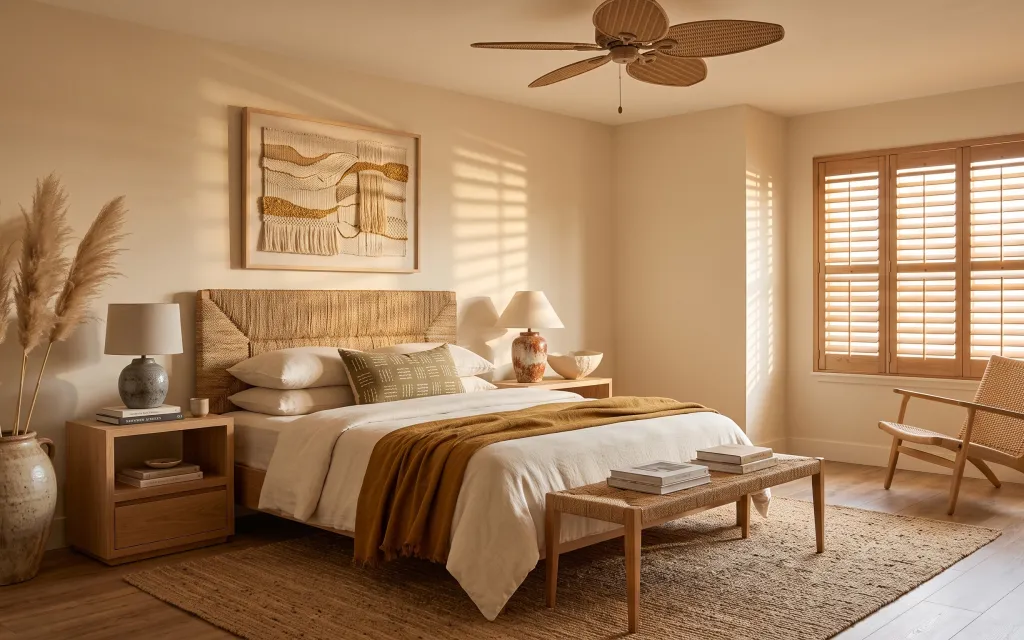
- Best for
- warm neutral bedroom updates
- Time
- one weekend (plus dry time)
- Total cost
- Under $700
- Renter-safe
- mostly yes (painted nightstand is owner-only)
Why the warm linen-and-tan palette is the bedroom of 2026
The first thing I noticed in this bedroom is how the textures do the heavy lifting: the upholstered headboard reads cozy, the throw blanket adds a casual drape, and the rug grounds everything with a softer underfoot feel. The framed art above the bed keeps the wall from feeling blank, while the warm lamp shades pull the whole palette together after the sun goes down. That’s the trick—layering materials like you’d see in an Architectural Digest styling spread, but keeping the choices homeowner-realistic for a weekend.
I almost overthought this look the first time I tried it in my own place. I grabbed “pretty” accents but forgot to repeat the same warm tones in multiple spots, so the room felt scattered. What changed my mind was matching the nightstand color to the palette and letting the rug and throw take turns being the texture star. Once that clicked, the room started looking like it belonged together—on purpose.
Layer 1 — Area rug 5×7 ($200) jute-look pile for soft landings
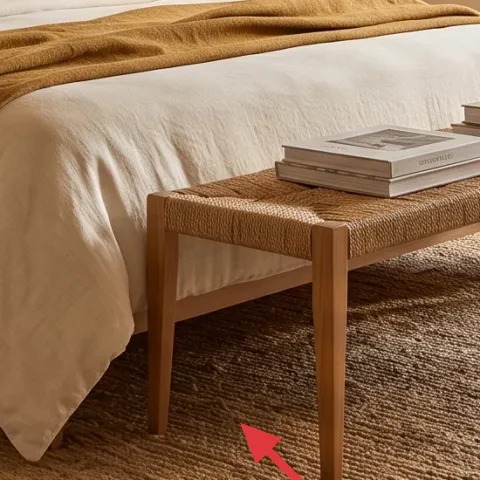
A large rug is the quickest way to make a bedroom feel finished, and this jute-look, warm-toned pile does that job without looking precious. In the photo, it sits under the bed and extends toward the bench, so your eye reads “one zone” instead of bare floor in between furniture legs. Buying a 5×7 sized rug is the safer call than going smaller, because bedrooms need overlap—especially when you have an upholstered headboard that visually takes up space. The trade-off is you’ll want a rug pad if your floor feels slick, so it stays put.
Pad for comfort and grip
Use a rug pad that won’t migrate; the extra cushioning also helps the room feel warmer when you step out of bed.
Layer 2 — Armchair by the window ($120) tan woven texture for a reading spot
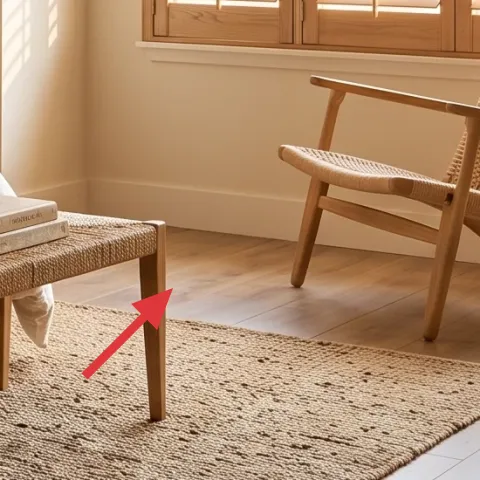
This tan woven armchair adds a second texture line to the room, which matters when your main surfaces are wood, upholstery, and linen-like bedding. Placed near the window, it benefits from the light spilling through the blinds, so the chair’s weave shows up even in daytime. The “obvious alternative” would be a solid upholstered chair, but that can make the palette feel flatter against the warm headboard and rug. A woven chair keeps everything breathable visually. The trade-off: choose a fabric finish you can wipe down if you eat a snack while reading.
Why woven works here
The room already has lots of vertical texture, so the chair’s weave looks intentional instead of like an extra accessory.
Layer 3 — Framed wall art above bed ($80) warm neutral abstract for the main wall
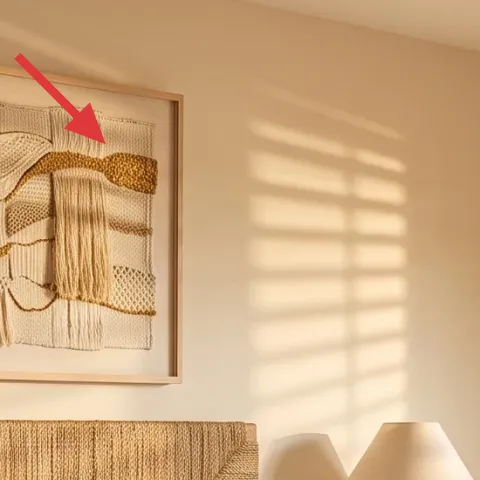
The framed abstract wall art is what pulls the bedroom together above the bed, where everything naturally stacks in one viewing spot. In the hero, the artwork’s warm neutrals echo the rug and throw, so you’re not fighting the room’s color family. Hanging art is usually the “hard part,” but it’s also one of the most movable elements—swap the frame, adjust height, and you’ll still get the same centered impact. The trade-off I accepted: picking a warm neutral print over something busier, because busy art tends to compete with patterned pillows and textures.
Don’t hang it too high
Keep the art at a comfortable eye-level height above the headboard—too high makes the bed look disconnected.
Layer 4 — Two drawer nightstand ($70) light wood storage beside the bed
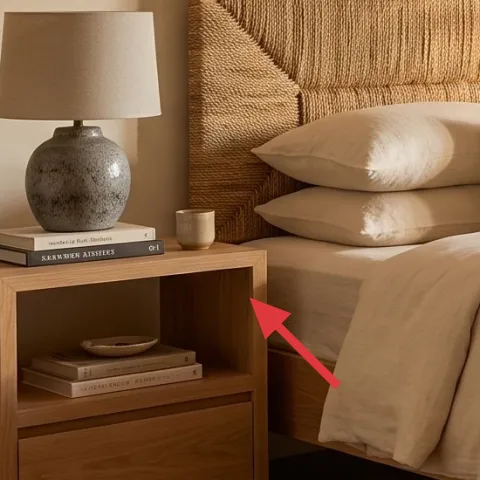
A two drawer nightstand gives you “real life” storage next to the bed, and it also provides a visual anchor on the left side. In the photo, it lines up with the lamp and the book stack, creating a tidy bedside shelf moment without needing extra decor. If you went with a smaller table, the lamp might look crowded; if you went with a bigger dresser-style piece, the bedroom could feel heavy. Light wood is doing double duty: it warms the palette and keeps the room from feeling too beige-on-beige. The trade-off is that you may need a quick wipe more often if you’re in a dusty area.
Match the finish to the rug tone
When wood and the rug share a similar warm undertone, the whole room reads cohesive even with different materials.
Layer 5 — Table lamp on nightstand ($60) warm-shaded glow for evening softness
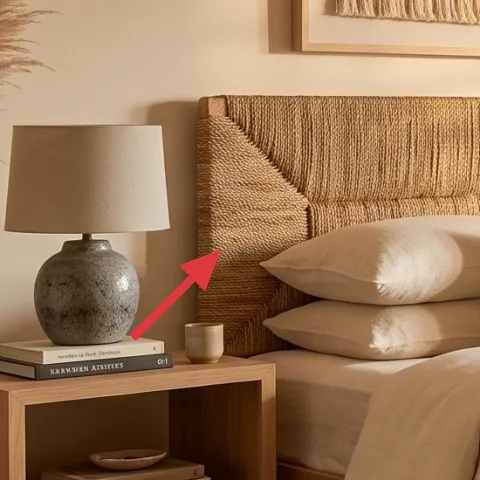
Lighting is the difference between “styled photo” and “lived-in bedroom,” and the table lamp does most of that work here. The warm shade softens shadows across the headboard and pillows, which makes the whole palette feel calmer at night. The photo also shows a second lamp on the dresser-style surface, so the vibe is balanced at two heights—nightstand height and mid-surface height. The obvious alternative would be one overhead-only light, but that creates harsh pools and a flat ceiling. The trade-off: choose a warmer bulb temperature so the wood and neutrals don’t go cool.
Two light sources, not one
Even if you only own one lamp today, planning for at least two points of light keeps the room from feeling dim.
Layer 6 — Throw blanket draped across bed ($60) tan edge detailing for contrast
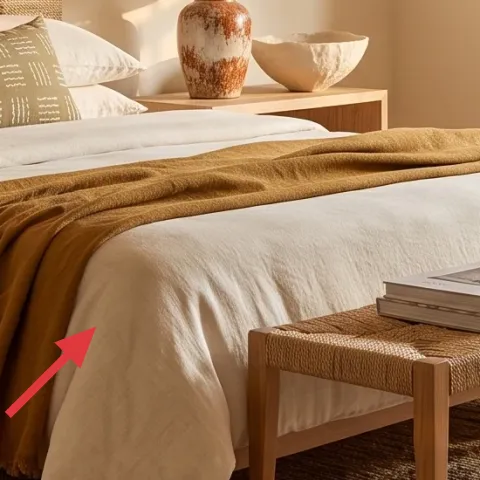
A throw blanket is the quickest texture upgrade you can see from across the room, and this tan drape adds contrast against the cream sheet set. In the hero, it’s laid along the front edge of the bed so it reads like “intentional styling” instead of just a folded extra. If you tried to get the same look with another pillow, it would still feel softer, but you’d lose that long, horizontal texture line that makes the bed look fuller. The trade-off I’d plan for: a throw this visible means you’ll probably swap it or smooth it out more often so it doesn’t look rumpled.
Use the fold like a design line
Drape it so the edge sits straight—creases look fine on the pillow faces, but not along the bed front.
Layer 7 — Painted nightstand ($80) fresh warm greige for a cleaner bedside
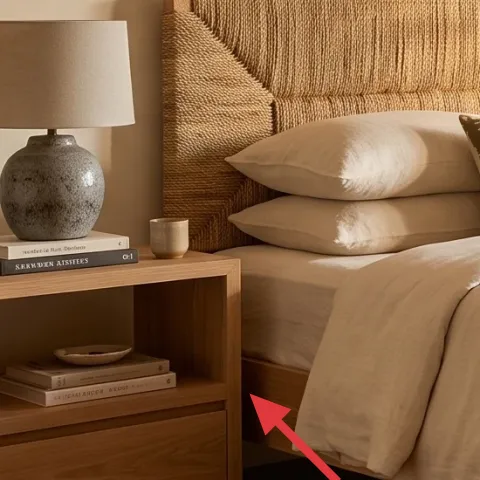
A quick paint refresh on the nightstand is how you get that “everything matches” look without replacing furniture. The hero’s bedside reads warm and cohesive with the rug and lamps, and repainting is the fastest route to that same harmony. The bought alternative is a pre-finished nightstand in a similar tone, but buying new usually costs more and creates a shipping timeline. Instead, painting lets you dial in the exact undertone—warm greige that matches the lamp base color and the rug’s sandy note. The trade-off: you’ll need a little prep so the finish doesn’t look patchy after the first coat.
Make it instead of buying it
DIY a warm-greige painted nightstand so your bedside wood matches the rug and lamp tones, without buying a new table.
Materials
- Bonding primer — 1 qt — hardware store — $18
- Interior paint (warm greige) — 1 qt — hardware store — $35
- Sanding sponges (medium/fine) — pack — hardware store — $10
- Mini foam rollers and brush set — 1 set — hardware store — $10
- Tack cloth — 1 pack — hardware store — $0
Steps
- Sand the nightstand lightly to scuff the finish and wipe dust with a tack cloth.
- Brush-prime corners and edges first, then roll a smooth primer coat on flat surfaces.
- Let the primer dry fully, then do a light sand-through for adhesion.
- Roll on the first warm-greige paint coat with long, even strokes.
- Let the paint dry fully, then apply a second coat for solid coverage.
- Touch up edges and hardware areas, then let cure before stacking items.
Total DIY cost: $73 — saves about $7 over buying.
The cost, layer by layer
| Layer | Item | Cost |
|---|---|---|
| 1 | Area rug 5×7 (jute-look) | $200 |
| 2 | Armchair by the window (tan woven) | $120 |
| 3 | Framed wall art above bed (warm neutral abstract) | $80 |
| 4 | Two drawer nightstand (light wood) | $70 |
| 5 | Table lamp on nightstand (warm-shaded) | $60 |
| 6 | Throw blanket draped across bed (tan) | $60 |
| 7 | Painted nightstand (warm greige) | $80 |
| Total | $670 | |
If you want a cheaper variant, keep the rug size the same but shop for a lower-cost woven-style runner in the same warm undertone, then refresh the nightstand with paint only. You can also swap to a simpler frame style for the wall art while keeping the warm neutral print.
What worked, what didn't (across the whole room)
This setup works because it repeats warm neutrals through multiple materials: rug, throw, wood, and lamps. The balance of texture (woven chair, plush headboard, draped blanket) keeps the bedroom from feeling flat. The only parts that could derail the look are height and undertone mismatches on the wall art and bedside lighting.
What worked
- The jute-look rug under the bed makes the whole furniture layout feel intentionally zoned.
- Warm neutral framed art creates a clear focal point above the upholstered headboard.
- Bedside table lamps soften shadows and make cream bedding read richer after dark.
- The tan throw blanket adds a long texture line across the bed front, not just extra pillows.
- The woven armchair adds breathable texture without making the room feel heavy.
- A warm-toned nightstand finish helps every vignette feel “matched,” not accidental.
What didn't
- If the lamp shades lean too white, the warm wood and rug tones can start to look dull.
- Wall art hung too high can break the relationship between the bed frame and the main wall.
- A rug that’s too small can make the bed feel like it’s floating on bare floor.
- If the throw blanket sits unevenly, it reads sloppy from across the room.
What we'd skip if we did it again
Skip buying a brand-new matching nightstand set. Pick one nightstand you already have (or replace just one), then paint it to match the warm undertones in the rug and lamps.
Skip a cool-toned white paint for the nightstand. Warm greige is more forgiving because it harmonizes with tan woven textures and the cream bedding without turning gray.
Skip oversized wall art that crowds the headboard area. In this layout, medium-size framed art centered over the upholstered headboard looks cohesive and keeps the ceiling and window area feeling open.
Frequently asked
How long does this kind of bedroom refresh take?
Most of the refresh is quick swapping: rug placement, chair positioning, and hanging the framed wall art. The paint DIY is what stretches the timeline—plan for sanding, priming, two coats of warm greige, and full dry/cure time before heavy use. If you already own the basic furniture, you can usually finish the whole look in a single weekend with paint dry time working in your favor.
What if I rent and can’t paint the nightstand?
If you rent, keep the nightstand as-is and focus on the non-permanent layers: rug size, a warmer framed art print, and a lamp shade swap if your light is too cool. You can also use an inexpensive tabletop tray or stacked books to mimic the “styled” bedside rhythm without changing the finish. The room will still read cohesive as long as the new pieces share the same warm undertone.
My bedroom is smaller—how do I scale these layers down?
In a smaller room, you can keep the same order of upgrades but reduce the footprint: choose a rug that still fits under at least the front legs of the bed, and place the armchair closer to the window with a slimmer profile. Keep the framed art centered above the headboard and aim for a size that doesn’t crowd the edges. The key is repetition: warm neutrals plus texture in 2–3 locations.
What if my bedroom is bigger—what should I add instead of overspending?
If you have extra wall space, you can keep the same hero pieces and add breathing room with one larger-format framed piece or a second matching framed print nearby. Consider a larger rug size (so it extends further beyond the bed) rather than adding more small decor items. The woven armchair can also become a mini seating vignette by adding one additional throw pillow in a matching tan tone.
Where should I shop for these specific looks on a budget?
For the rug and framed art, look for warm neutral jute-look and abstract prints at home decor retailers and big-box stores with seasonal pricing. For the lamp, focus on lamp bases and shades in warm tones—online listings often show the exact shade color. The nightstand paint DIY can be done with any standard hardware-store primer and warm greige interior paint, as long as you match the undertone to your lamp and rug.
What’s the biggest mistake people make with this style?
The biggest mistake is mixing undertones—going too cool in one element and too warm in another—so the room starts to look “almost right.” The second mistake is buying a rug that’s too small, which makes the bed feel disconnected from the rest of the furniture. Keep the palette warm (cream, tan, warm greige) and size each anchor piece correctly, and the look holds together.
More in Bedroom
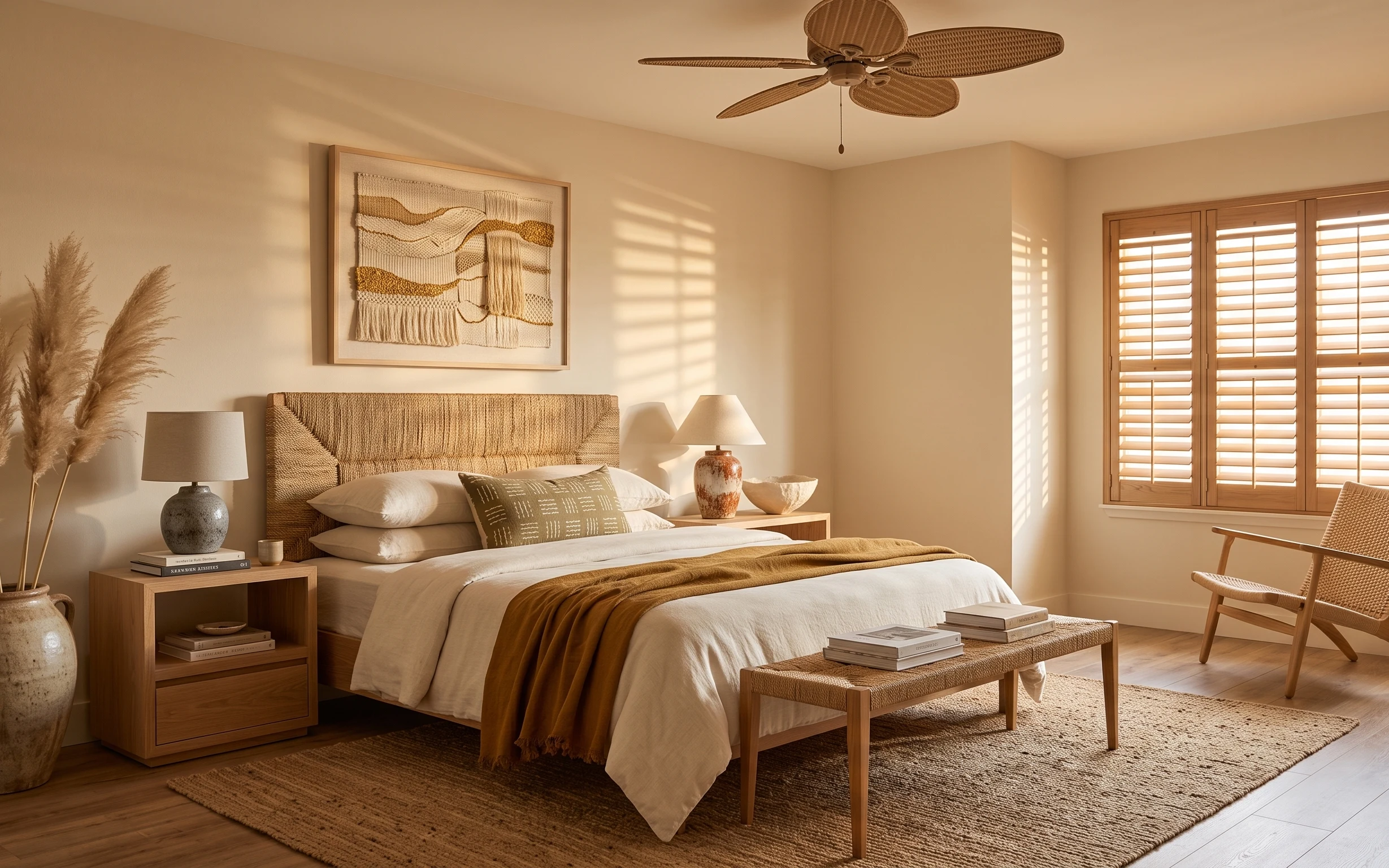
Under $700: warm neutral bedroom refresh with 7 upgrades
A warm, boho bedroom refresh you can finish over a weekend for under $700. Use a jute-look rug, one statement framed piece, and cozy bedsid…
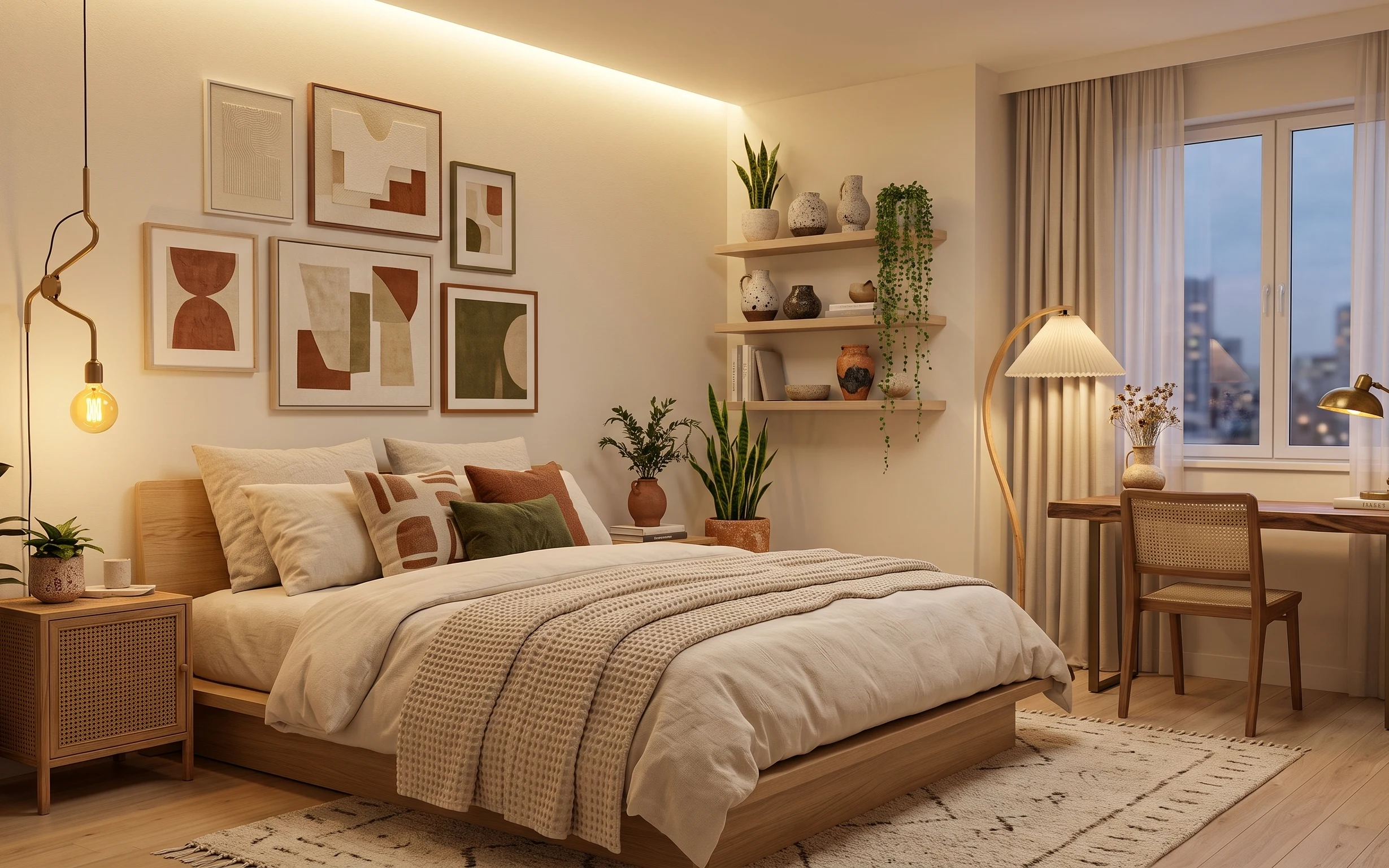
Under $600: olive-and-terracotta bedroom swaps with 7 layers
A warm, earthy bedroom look—olive accents, cream textiles, and framed art—built from 7 move-ready swaps. This refresh stays under $600 and …
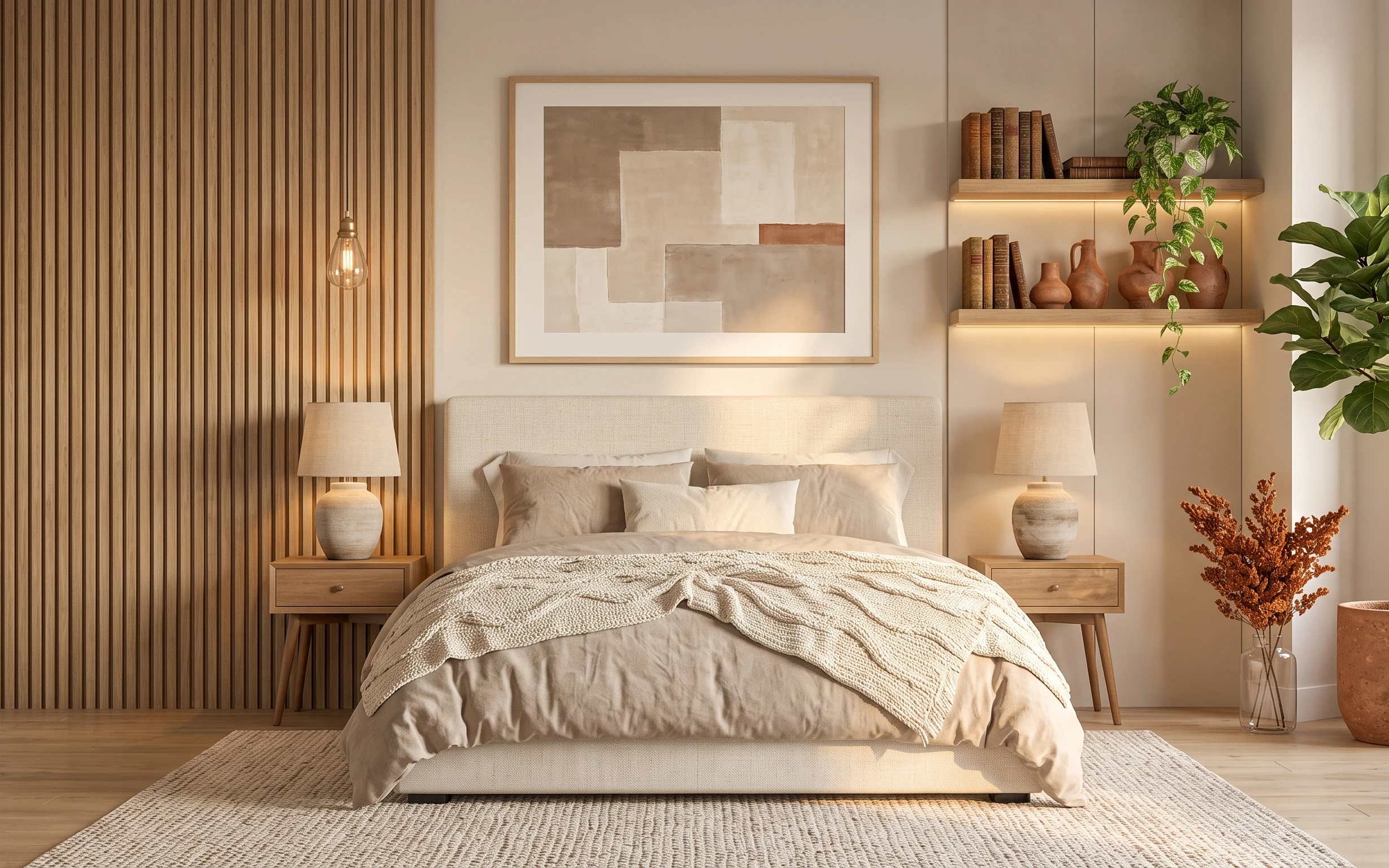
Under $700: warm wood-and-cream bedroom refresh with 7 swaps
A warm wood-and-cream bedroom refresh that looks designed without major renovation. This weekend plan uses 7 visible swaps for bedding styl…