- Best for
- Bed zone styling
- Cost
- Under $700
- Difficulty
- Confident DIY
- Time
- One to two weekends
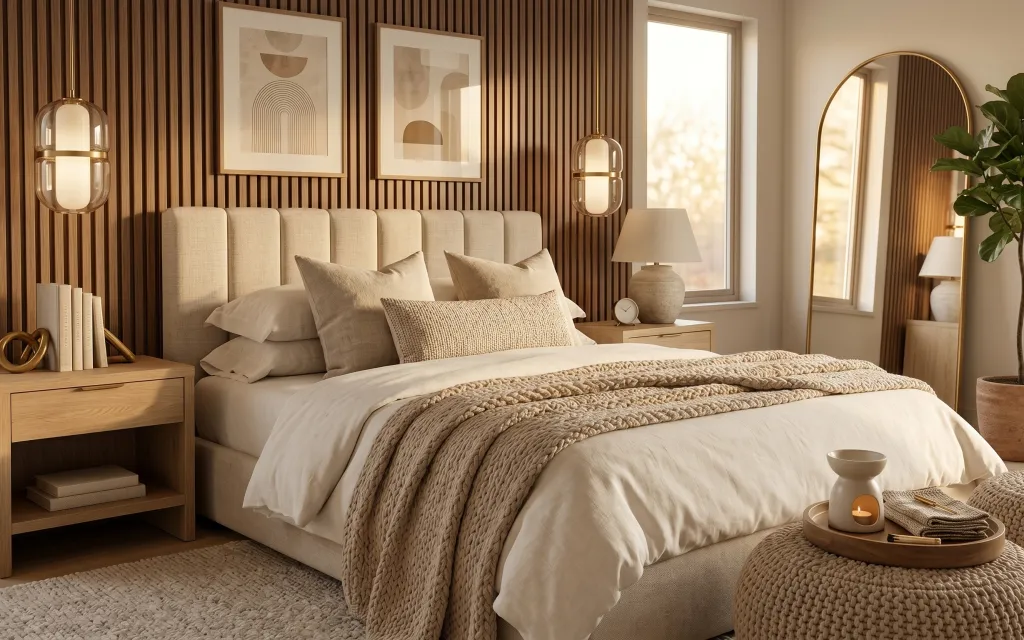
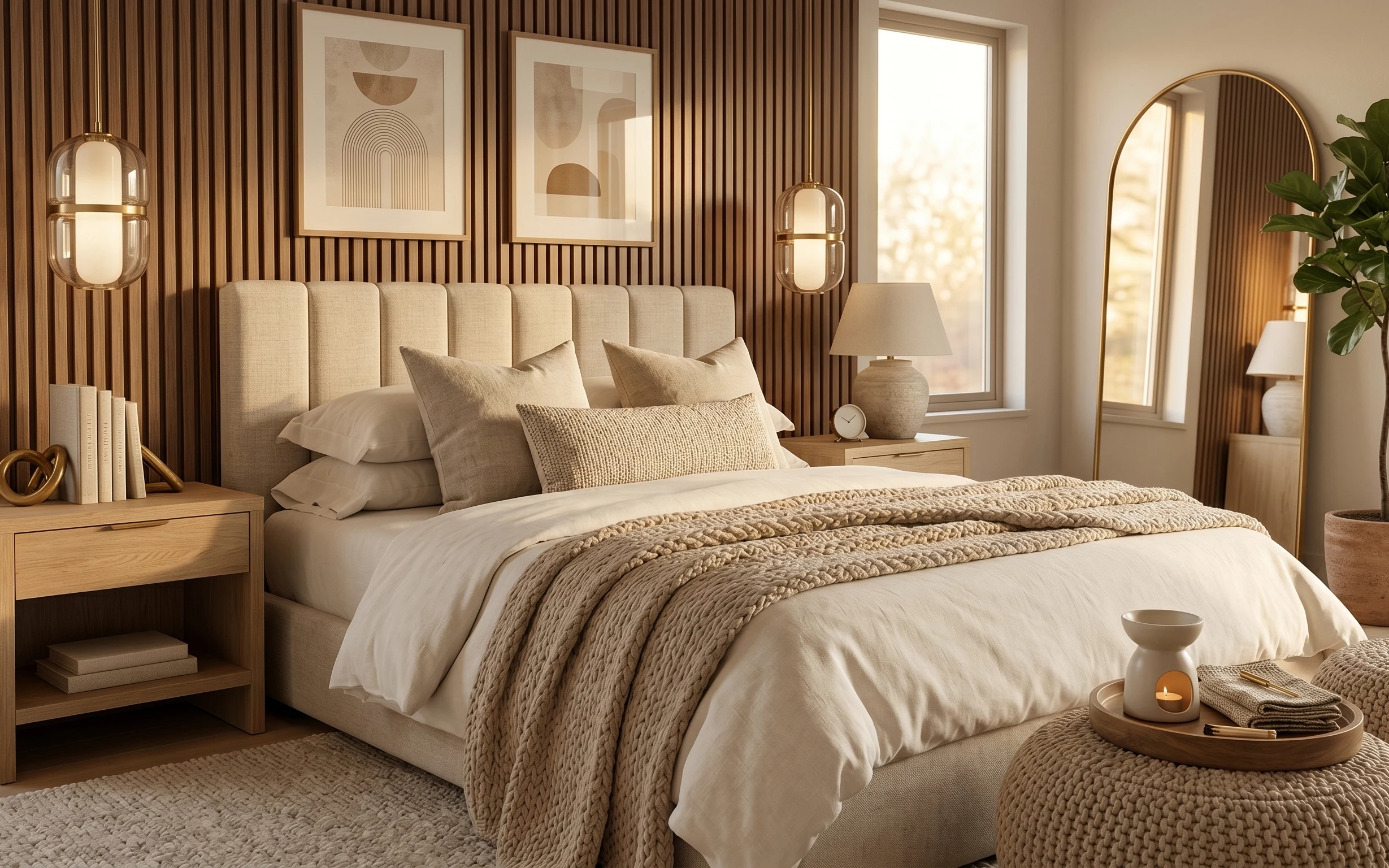
Why this warm walnut-and-cream bedroom nook is the bedroom nook of 2026
That warm wood slat wall and the cream bedding do most of the heavy lifting already, so the goal is to make everything else look “meant” to be together. Start with the light beige area rug, then build up to wall art with two matching framed prints. A beige fabric table lamp adds the same soft color temperature as the room’s lighting mood, without fighting the wood tones. Finally, the knit throw and textured pillow cover bring in that cozy, woven feeling that reads as high-end in person.
I almost went too matchy on my own bed zone the first few times I styled it—everything the same cream shade made the whole corner feel flat. This layout fixed that by mixing textures: knit vs. smooth sheet fabric, and woven pillow texture against clean lines. Once the rug and wall art anchored the palette, the room looked curated even when I kept the accessories minimal.
Layer 1 — light beige area rug 5×7 ($150) Define the bed zone underfoot
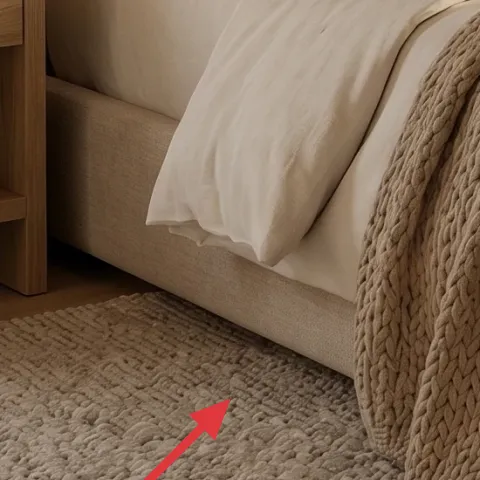
The rug is the quiet anchor here: a light beige 5×7 that warms up the wood floor and gives the bed a grounded base. Because it’s close to the bedding color, it avoids that “floating furniture” look you get when the floor goes bare. The trade-off is that it won’t hide every dark shoe scuff, so you’ll want a quick vacuum pass and immediate spot blotting. If you sized it too small, the bed would feel like it’s sitting on top of the room; sized right, it makes the whole nook read intentional.
Use the “front legs rule”
Position the rug so the front legs of the bed land on the rug—then the room feels pulled together even with minimal styling.
Layer 2 — two framed wall art prints ($160) Balance the wood slat wall
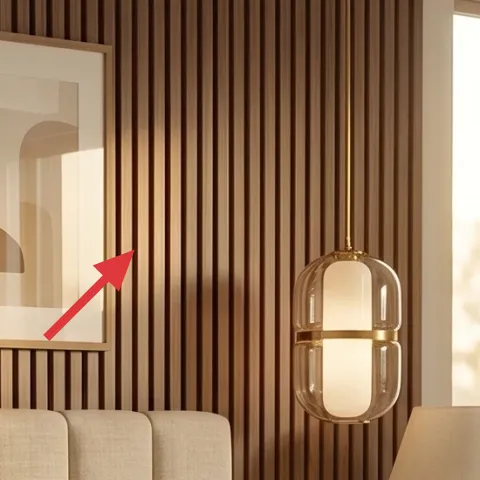
Those two framed wall art prints give the wall rhythm and soften the vertical slat texture behind the bed. Matching frames (same material tone and consistent borders) matters more than the exact print image, because the room already has a strong pattern in the slats. I’d skip a random single print here—one piece would feel too lonely against the scale of the wall. The trade-off is measurement: you need to center them at eye level and keep spacing consistent so the symmetry doesn’t look accidental.
Keep the frames the same “warm” family
Warm wood undertones in the frames echo the slats and prevent the prints from looking like a different room entirely.
Layer 3 — table lamp with beige fabric shade ($60) Add soft light without glare
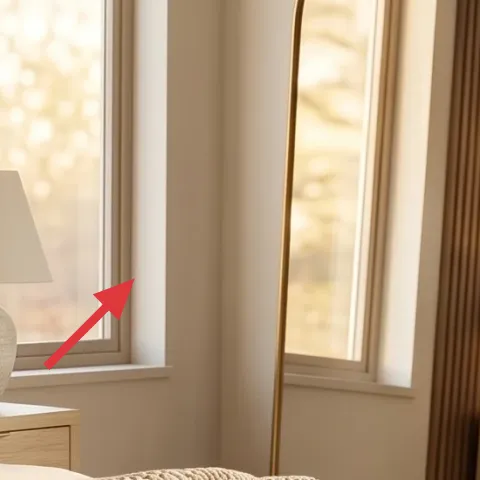
The beige fabric-shade table lamp is what makes the bedroom feel lived-in instead of staged. It echoes the cream bedding while still adding contrast to the warm wood tones, and the shade texture diffuses the light so you don’t get harsh hotspots near the window trim. The alternative—going for a stark white LED bulb or a glossy shade—would make the room look colder and more “display” than “rest.” Trade-off: fabric shades collect dust, so plan for an occasional gentle wipe or vacuum attachment.
Match bulb warmth to the mood
Choose a warm bulb temperature so the lamp reads cozy alongside the room’s soft, warm lighting.
Layer 4 — wood nightstand with open shelf ($80) Make bedside storage visible
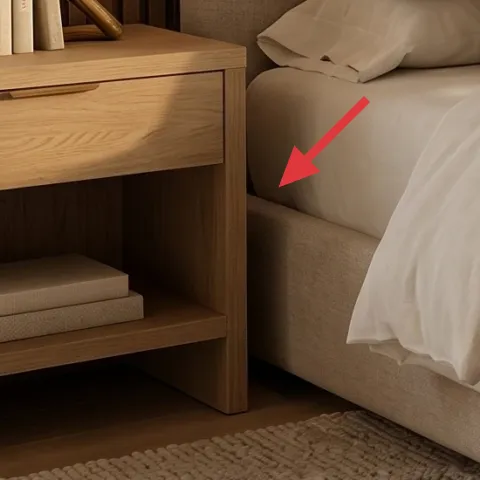
This wood nightstand with its open shelf keeps the bed setup practical while also adding texture. The warm tone matches the wood slat wall, and the open storage lets you style a couple of small items so the surface doesn’t look empty. If you swap to a closed drawer-only nightstand, you lose that layered, “used” look. The trade-off is dust visibility on the shelf—open shelving reads best when the items are grouped tightly and not too tall.
Don’t overload the shelf height
If objects reach above the lamp line, the bedside area starts to feel cluttered instead of curated.
Layer 5 — fabric pillow cover (neutral woven texture) ($40) Bring in texture without changing the palette
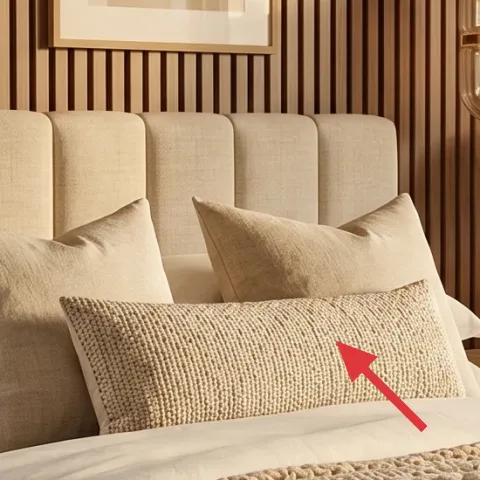
The neutral woven-texture pillow cover adds the tactile contrast this room needs—especially against the smoother sheet fabric. It’s an easy upgrade because you can keep the pillow count the same and just swap one cover for something with visible texture and a slightly different off-white tone. The trade-off is that textured covers can snag or pill over time, so avoid abrasive detergents and consider a gentle wash cycle. Compared with adding another throw blanket, a pillow cover gives you texture at eye level, where styling usually gets noticed first.
Use one texture, not three
In this palette, one standout texture (like this woven cover) is enough—stacking too many patterns makes the wood wall feel busier.
Layer 6 — thick knit throw blanket ($45) Make the bed look styled, year-round
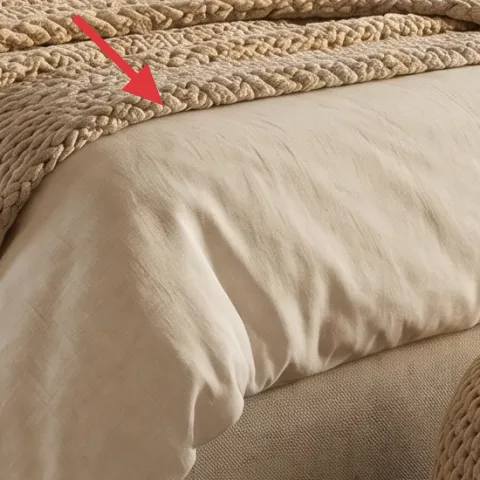
The thick knit throw blanket reads cozy because it has visible depth—those chunky loops catch light and create shadow, even in soft daylight. It also makes the bed feel “finished” without adding more furniture. The biggest win is placement: drape it where your eyes land at the foot of the bed, with enough hang to show texture but not so much that it bunches. The trade-off is weight and care; thicker knits need gentler handling and may shed a little at first, so a quick shake outside helps.
Drape with intention
Let the throw fall in one controlled section rather than spreading it flat—keeps the texture looking dimensional.
Layer 7 — arch floor mirror ($120) Add light and soften the doorway line
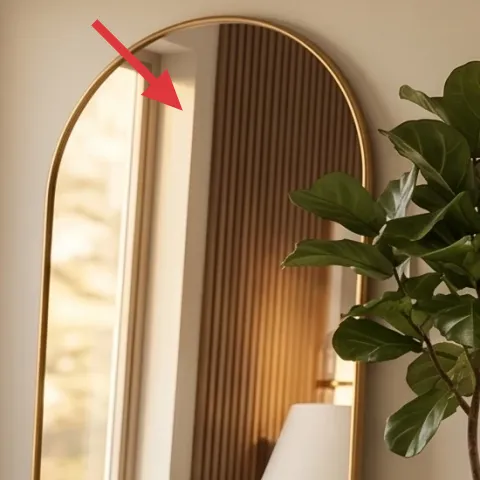
The arch floor mirror brings brightness and a gentle curve that balances the straight lines of the slat wall and window trim. It also extends the warm neutral palette into the rest of the room by reflecting the daylight, which helps the bed zone feel less closed-in. You could skip a mirror and rely only on the lamp, but the lamp can’t widen the visual space the way a reflector can. Trade-off: you’ll want to position it so the reflection isn’t showing clutter, and secure it if it’s leaning (a weighted base makes it safer).
Angle for the clearest reflection
Turn it slightly until you see mostly window light, not the floor or bedside clutter.
The cost, layer by layer
| Layer | Item | Cost |
|---|---|---|
| 1 | Light beige area rug 5×7 | $150 |
| 2 | Two framed wall art prints | $160 |
| 3 | Table lamp with beige fabric shade | $60 |
| 4 | Wood nightstand with open shelf | $80 |
| 5 | Fabric pillow cover (neutral woven texture) | $40 |
| 6 | Thick knit throw blanket | $45 |
| 7 | Arch floor mirror | $120 |
| Total | $655 | |
If you want a cheaper version, prioritize the rug, one framed print, and the throw blanket; swap the mirror for a smaller wall mirror or skip it entirely. Keeping just one lamp and one textured pillow still makes the bed look styled.
What worked, what didn't (across the whole room)
The strongest improvements came from anchoring the bed zone: rug first, then wall art, then soft textiles at eye level. The lighting added a calm glow, while the mirror helped the corner feel brighter without adding clutter.
What worked
- The light beige rug made the bed feel grounded instead of hovering on a bare floor.
- Two matching framed prints brought symmetry against the busy vertical slat wall.
- The beige fabric-shade lamp diffused light and kept the room feeling soft.
- The wood nightstand’s open shelf added real-life styling space without bulk.
- The thick knit throw created depth and shadow at the foot of the bed.
- The arch floor mirror softened straight lines and reflected window brightness.
What didn't
- A second “standout” texture would have competed with the slat wall pattern.
- Too-small wall art would have read as decorative clutter rather than a focal pair.
- Overfilling the open nightstand shelf would push the setup into visual noise.
- Choosing a glossy shade instead of a fabric shade would have looked sharper than cozy.
What we'd skip if we did it again
Skip adding more pillows than the bed already uses. This room already has a strong pattern in the wood slats, so extra pillow covers can blur into “too much going on,” even in neutral colors.
Skip a large wall art single instead of the two-print pairing. Against the slats, one print tends to look accidental, while two creates rhythm and makes centering feel deliberate.
Skip a high-contrast rug that’s much darker than the bedding. It would make the bed zone feel heavier than the warm, airy palette, and you’d lose the calm, cohesive look the rug currently supports.
Frequently asked
How long does this bedroom refresh usually take?
Most people can finish it in one weekend if the items are already in hand. Rug placement, positioning the lamp, and arranging the nightstand are fast. The framed prints usually take the longest because of measuring and making sure the spacing is straight. If you’re re-hanging anything or leveling the mirror, add an extra half day for adjustments.
What if I rent and can’t hang framed art the same way?
Choose hanging methods that don’t leave lasting marks, like removable wall hooks or a picture-hanging strip system. If the frames are light enough, you can also lean them temporarily on a console or dresser while you test the composition. The rug, lamp, throw blanket, and pillow cover still deliver most of the visual change without any wall work.
Can I do this if my room is smaller?
Yes—keep the same logic, just scale down the “anchor” sizes. Use a slightly smaller rug if needed, but still aim to get the bed’s front area onto the rug. For wall art, keep to a tight pair layout so the wall doesn’t look empty. A slimmer mirror option can still reflect daylight without taking over the room.
What if my bedroom is larger and the bed wall feels too blank?
Lean into scale by making the framed prints a wider set or moving them slightly higher on the wall for better proportion. A bigger arch mirror or a second mirror on another wall can help, but it’s important to keep the palette consistent so the slat wall stays the focal texture. If you add anything, add it through texture—throws and pillow covers—rather than more patterns.
Where can I shop for pieces like this without overspending?
Start with the rug and framed prints at home goods retailers or marketplaces where neutrals are common. For the lamp, look for a fabric shade and warm light bulb compatibility, then check local thrift stores for bases with a similar warm tone. The throw and pillow cover are often the easiest to find in neutral woven textures, especially from bedding sections.
What’s the biggest mistake people make with neutral bedrooms?
They go flat on texture and end up with one-note cream everywhere. The way around it is to mix at least two texture families: knit throw vs. smoother sheet fabric, plus one woven or textured pillow cover. Once the textures vary, the neutral palette stops feeling boring, and the room reads intentional even without bold colors.
More in Bedroom
Under $700: neutral bedroom refresh with 7 weekend upgrades
A neutral bedroom refresh that feels more intentional—without a renovation. This weekend plan uses 7 budget-friendly upgrades (rug, framed …
Under $400: olive-and-clay bed nook refresh for shared housing
A rented-bed nook makeover built from soft goods: rug, throw, dyed pillow covers, curtains, string lights, and a framed botanical print. Ev…
Under $500: boho bedroom refresh with move-ready swaps
A boho bedroom update built for shared housing: soft warm light, layered textiles, and renter-safe wall styling. This look comes together f…