- Best for
- Styling a small desk nook
- Cost
- $665 total, under $700
- Difficulty
- Easy to Moderate
- Time
- One weekend
Why warm oak-and-beige bedroom styling is the dressing table nook of 2026
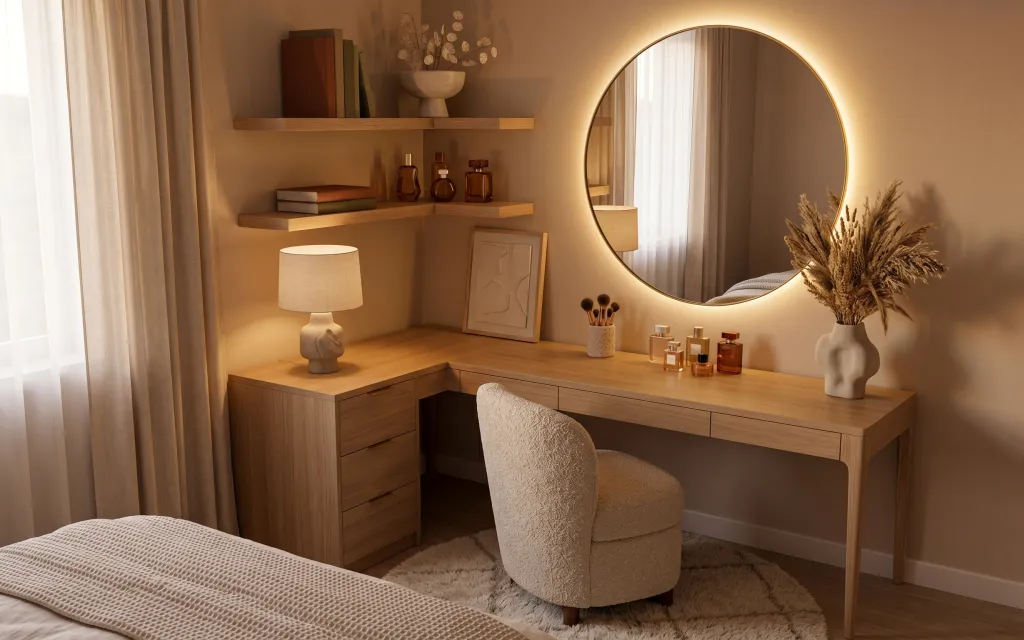
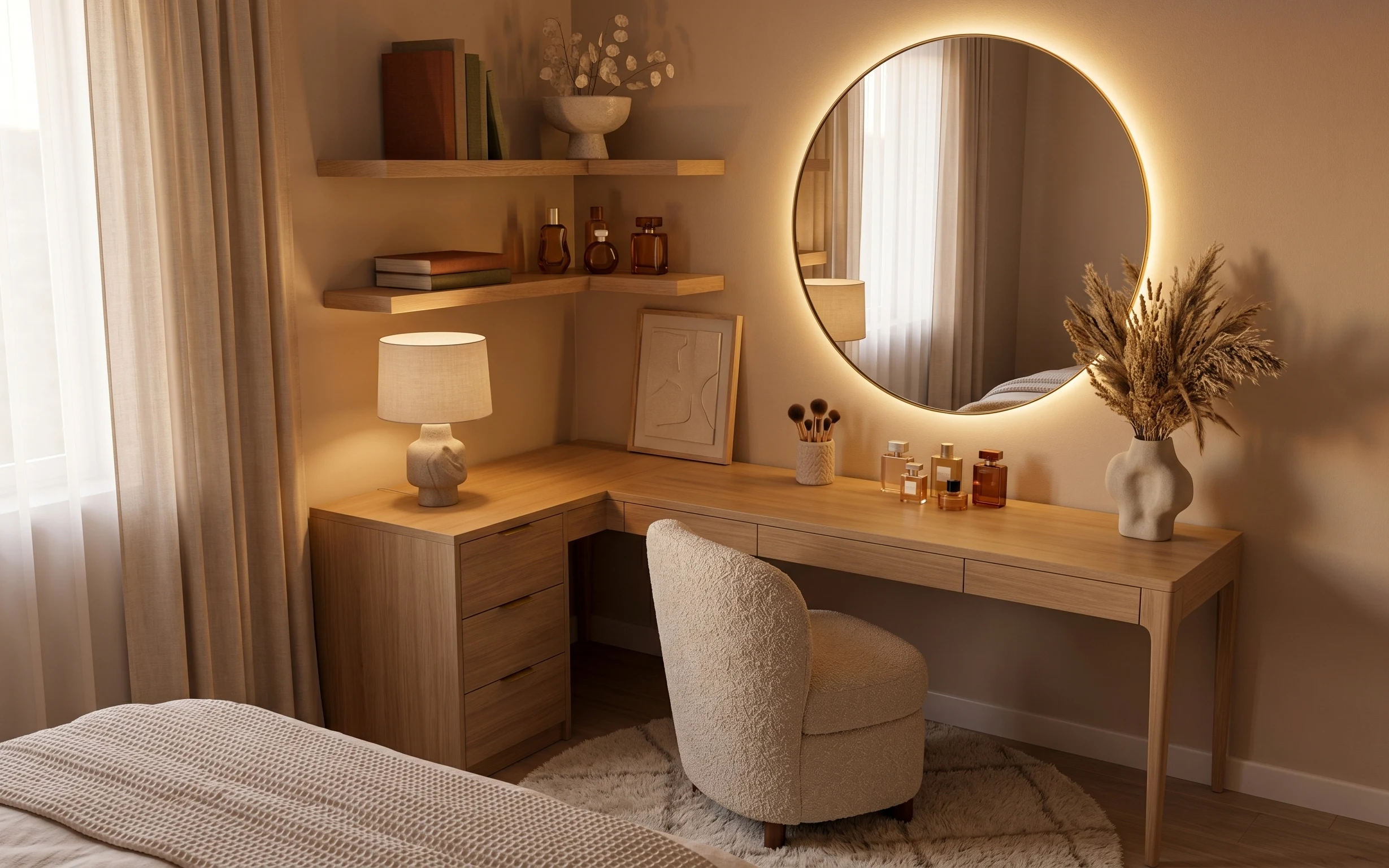
This corner already has the bones of a calm japandi look: light wood tones, creamy textiles, and soft, warm light. What makes it feel finished is the stacking—rug underfoot, a rounded chair for softness, and those floating shelves for vertical order. The round mirror also does double duty by reflecting the window curtains and making the whole desk area look larger. For homeowners with limited time, that’s the key: choose a few high-impact pieces you can place in a day, then style them with the same warm palette.
I almost went too neutral and ended up with a flat, beige-on-beige moment. The fix for me was remembering that texture does the heavy lifting: the fuzzy rug pile, the linen-like curtains, and the ceramic shapes around the desk. I also learned to stop at one “statement” wall feature—this mirror—then keep everything else quieter so the nook looks cohesive instead of busy.
Layer 1 — cream area rug ($120) Texture underfoot that hides wear
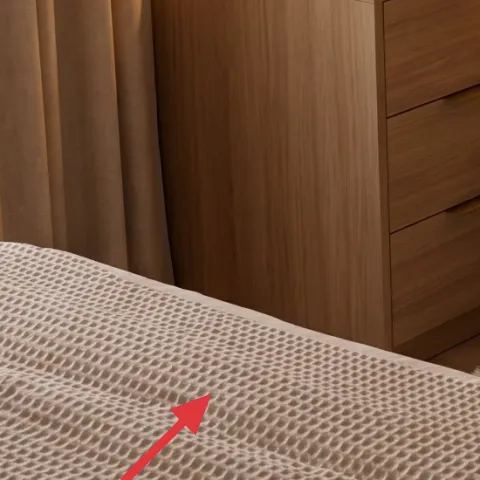
A cream area rug anchors the desk and chair so the whole nook reads as intentional, not just “furniture sitting on flooring.” Look at the pile and how it softens the straight lines of the wood desk and the rounded chair arms. I’d rather buy a rug like this than replace more visible furniture first, because rug color and texture set the tone for everything you add after. The trade-off is keeping it clean—cream will show lint—so a quick vacuum schedule matters. Pair it with warm lamps and beige curtains and the rug instantly feels brighter, not dingy.
Choose the right pile for daily use
A medium pile helps hide footprints and clutter edges better than a low flatweave in busy mornings.
Layer 2 — white table lamp with cream shade ($60) A warm glow without changing wiring
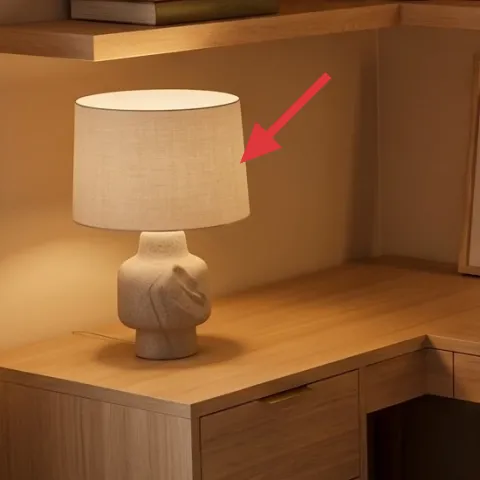
This white lamp with a cream shade adds the kind of soft lighting that makes a dressing table nook feel “ready” after work, not just decorative by day. It sits on the desk surface in the hero image, so it also helps fill the visual gap between the rug and the higher shelves. Swapping to a plug-in lamp is the easiest way to control mood—no permitting, no fixture swaps—while still getting that warm, layered look. The trade-off is that the lamp won’t be as bright as an overhead, so it works best when the mirror and curtains bounce light. Aim for warm bulbs to keep the beige palette cohesive.
Let the mirror help the lamp
Because the mirror reflects the room, a single warm lamp reads brighter than you’d expect from its size.
Layer 3 — large round wall mirror ($120) One curve to soften the whole setup
The large round mirror is the moment that changes the room’s feel—everything else is mostly straight lines (desk, chair, curtains), and the mirror’s curve breaks that up. It’s positioned on the right side of the desk area in the photo, where it reflects the cream curtains and makes the nook look taller. I’d pick a round mirror over a rectangular one here because this desk setup already has a lot of warmth and visual texture; a curve feels calmer and more “designed” without being trendy. Trade-off: round mirrors can be a little pricier, but the payoff is that it makes a small corner feel open.
Pick a size that reaches the “work zone”
When the mirror overlaps the curtain height, the reflection looks intentional instead of accidental.
Layer 4 — floating wood shelves ($90) Vertical storage that stays pretty
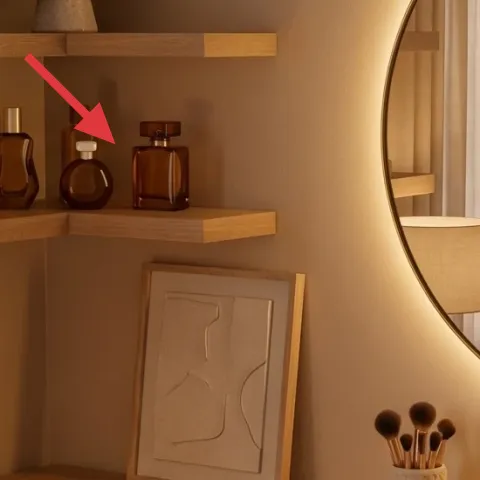
These floating wood shelves make the nook work for real life: they give you a place for books, small ceramics, and styling objects without taking desk space. In the hero image, the shelves run horizontally above the desk, which visually extends the width of the corner and keeps the styling at eye level. I’d choose this over adding more countertop organizers because shelves give you both storage and a background for decor. The trade-off is that you have to style them intentionally—too many small items can look cluttered. Stick to a warm mix: one stack of books, a couple of ceramic pieces, and room for negative space.
Don’t overcrowd the shelf edge
If every inch has a small object, the nook reads busy instead of calm.
Layer 5 — upholstered chair with rounded arms ($160) Soft seating that matches the mirror
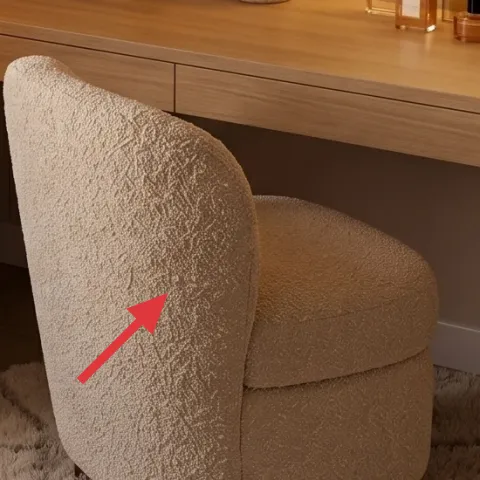
The upholstered chair is what makes this dressing table nook feel like a place you’ll actually use, not just an area for photo-perfect styling. The rounded arms and light neutral upholstery echo the curve of the mirror and keep the desk setup from feeling too sharp. I’d spend on a chair before adding extra decor because comfort affects how often you sit down to do hair or skincare routines. The trade-off is that upholstery can trap lint, so keep a lint roller nearby. Still, it’s one of the best “weekend changes” because the chair immediately changes how the space reads from every angle.
Match the chair tone to your curtains
When the chair upholstery and curtain warmth are close, the nook looks cohesive instead of mismatched.
Layer 6 — framed print leaning against the desk ($80) DIY color that tightens the palette
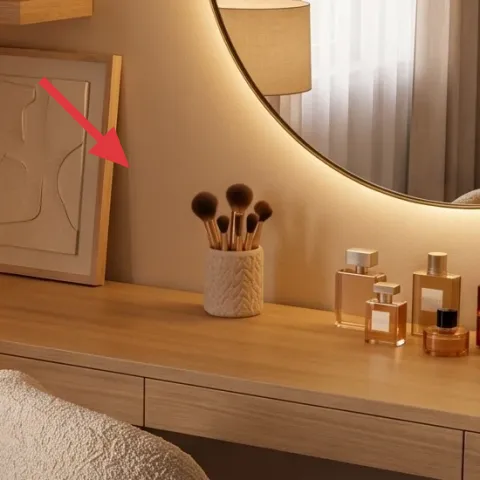
Make it instead of buying it
Paint the wood frame on the leaning framed print so it matches the warm oak and beige tones already in the nook.
Materials
- Chalk paint or furniture paint (sample jar) — 1 small container — Sherwin-Williams or craft store — $25
- Painter’s tape — 1 roll — hardware store — $8
- Fine-grit sanding sponge — 1 pack — hardware store — $6
- Clean microfiber cloths — 2–3 — household store — $5
- Foam brush for edges — 1 pack — craft store — $7
Steps
- Clean the frame with a dry microfiber cloth to remove dust.
- Lightly scuff-sand the frame with a fine sanding sponge (no need to strip it fully).
- Tape off the print edges so paint stays only on the frame.
- Apply the first thin coat of paint with a foam brush, keeping edges crisp.
- Let the coat dry fully, then lightly sand the surface for smoother adhesion.
- Apply a second thin coat, then remove tape after the final coat is just set.
- Let the frame dry completely before leaning it back into place.
- Re-style around it so the color reads intentional with the lamp and mirror tones.
Total DIY cost: $51 — saves about $29 over buying.
Layer 7 — white vase with dried pampas grass ($35) One sculptural plant moment
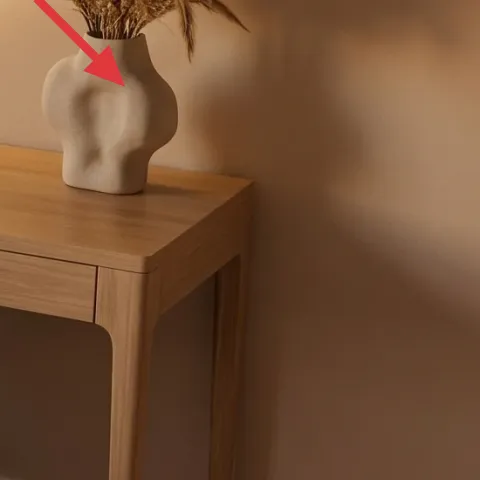
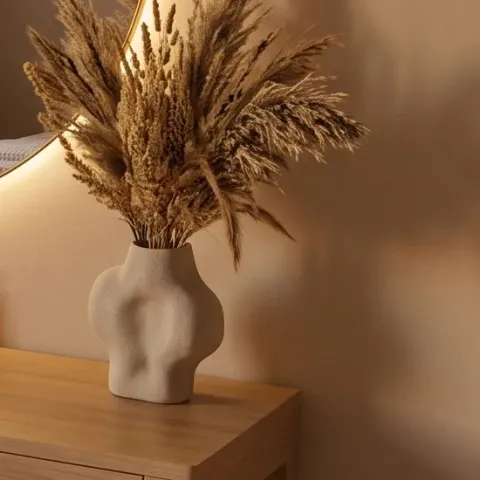
This white vase with dried pampas grass adds organic shape and height, which is exactly what a dressing table nook needs above eye level. It sits on the right side of the desk in the hero image, balancing the round mirror and giving the shelves and bottles a “soft landing” visually. I’d rather add one taller plant moment than scatter multiple tiny decor items because it looks intentional and reads quickly from across the room. The trade-off is that pampas sheds a little, so keep it away from heavy airflow and brush it occasionally. A vase like this also plays nicely with warm beige walls and cream textiles.
Pick one height, then repeat a color
Match the vase warmth to the lamp and rug so the dried grass reads part of the palette.
The cost, layer by layer
| Layer | Item | Cost |
|---|---|---|
| 1 | Cream area rug 5×7 | $120 |
| 2 | White table lamp with cream shade | $60 |
| 3 | Large round wall mirror | $120 |
| 4 | Floating wood shelves (set) | $90 |
| 5 | Upholstered chair with rounded arms | $160 |
| 6 | Framed print with wood frame (DIY paint) | $80 |
| 7 | White vase with dried pampas grass | $35 |
| Total | $665 | |
Cheaper variant: choose a smaller mirror ($80) and hunt a rug closer to a 4×6 size ($80). Swap the chair for a basic upholstered side chair ($120) and use one fewer decor item on the shelves. You’ll still keep the calm curve-and-warm-light look.
What worked, what didn't (across the whole room)
This nook reads cohesive because the warm beige and light oak tones repeat across textiles, lighting, and wood. The mirror and shelves do the heavy lifting: they create vertical structure while keeping the desk surface styled. The DIY frame also helped the corner feel “edited,” not random.
What worked
- The cream rug softened the desk and made the chair feel welcoming instead of stiff.
- The round mirror reflection made the curtains feel brighter and the corner taller.
- The floating shelves kept everyday items off the desk while still showing decor.
- The warm lamp glow balanced the beige walls without needing an overhead change.
- The upholstered chair tied into the mirror’s curve and made the nook usable.
- Painting the leaning framed print tightened the palette around the desk objects.
What didn't
- If the shelves are too full, the nook starts to look like decor storage instead of styling.
- Cream textiles pull lint fast, so the rug and chair need quick maintenance.
- Placing the vase too close to the mirror edge can block the reflected curtain light.
- If the lamp bulb runs cool, the warm beige tones look gray instead of cozy.
What we'd skip if we did it again
Skip adding more small decor items before the big shapes are in place. A rug, a lamp, and the round mirror set the visual rhythm; once those are right, everything else should support them.
Skip over-styling the floating shelves. Start with one book stack and two or three ceramics, then stop—negative space is what keeps the japandi calm.
Skip replacing the chair with anything that’s too dark or too shiny. Light upholstery keeps the room feeling airy, and it also matches the curtain and rug textures in the photo.
Frequently asked
How long does this dressing table nook refresh take?
Plan for about one weekend. Rug and chair placement usually takes an hour or two, and styling can happen the same day as the lighting. Shelves take the most time because of measuring and getting spacing right. Painting the frame is quick, but the drying time stretches the calendar a bit, so it’s smart to do that while the rest goes in. Overall, it’s realistic for a first-time homeowner.
What if I’m renting—can I still copy this look?
Yes, you can keep the vibe with more reversible choices. Swap the floating shelves for a version that uses a renter-safe mounting method (or use countertop-style storage on the desk). For the mirror, look for a wall-safe hanging option if anchors aren’t allowed. Stick with a plug-in lamp, and use curtain panels you can install with a proper rod. The overall palette and round mirror/soft textiles combo will still read intentional.
My room is smaller. Should I go smaller on the mirror or the rug?
If the room feels cramped, prioritize the mirror size first. A round mirror still works, but choose a diameter that doesn’t crowd the curtains. For the rug, if you can’t fit a 5×7 comfortably, go for the biggest size that still leaves a clear walking path. In a smaller space, keep shelves slightly lighter—fewer objects—so the vertical area stays airy. The goal is balance, not symmetry.
Where are the best places to shop for these items on a weekend budget?
For the rug and lamp, home stores and big-box retailers are usually the fastest option. Floating shelves and wall mirrors are commonly available online with fast shipping, which matters if you want everything done in one weekend. For the chair, thrift stores can be hit-or-miss, but you’ll save a lot if you’re okay with upholstery fabric surprises. The best shortcut is to buy the “big” items first: rug, mirror, and chair.
What’s the biggest mistake people make with a dressing table corner like this?
Overloading the shelves is the most common issue. When every spot is filled, the nook stops feeling calm and starts feeling cluttered, even if the items are pretty. Another frequent misstep is buying a rug that’s too cool-toned or too thin—then the warm wood and beige walls look mismatched. Keep one statement shape (the round mirror), repeat warmth in textiles and lighting, and use negative space as part of the design.
More in Bedroom
Under $700: warm oak dressing table nook refresh
A warm oak-and-cream dressing table nook can look intentional on a weekend. With $700 worth of swaps (rug, lamp, round mirror, shelves, cha…
Under $400: sunlit bedroom corner refresh with 7 move-ready swaps
A sunlit bedroom corner starts with warm neutrals, then gets its “done” look using 7 move-ready swaps. This refresh keeps everything renter…
Under $500: boho bed nook refresh with 7 easy upgrades
A cozy boho bed nook with sage-green bedding and warm string lights looks like a whole weekend makeover—without turning it into a renovatio…