- Best for
- renter-friendly dining styling
- Cost
- Under $700
- Difficulty
- Easy (styling + one DIY)
- Time
- 1 weekend
Why warm rattan-and-cream styling is the kitchen-dining nook of 2026
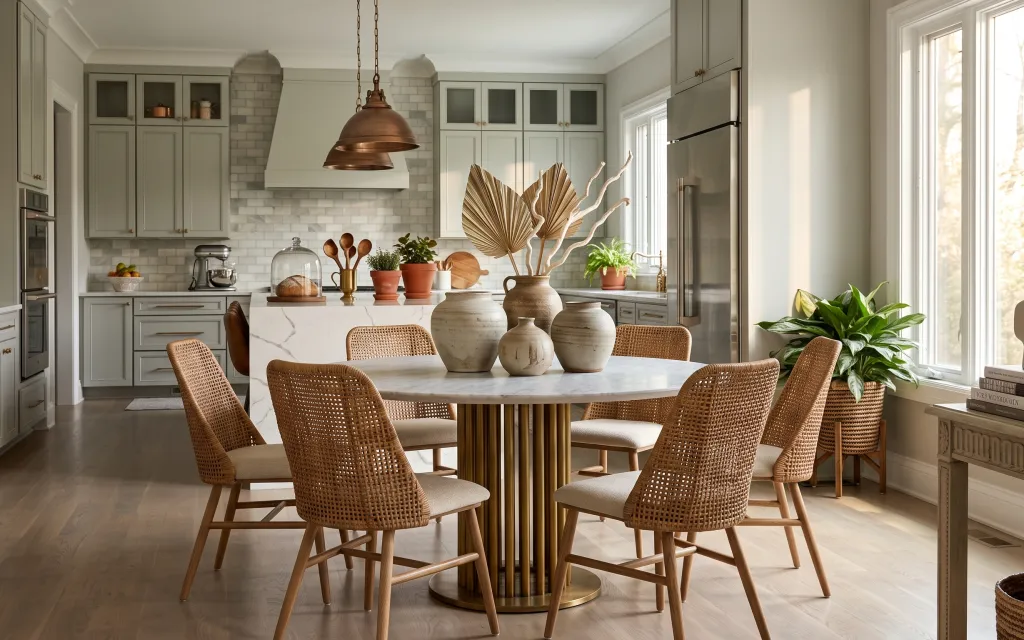
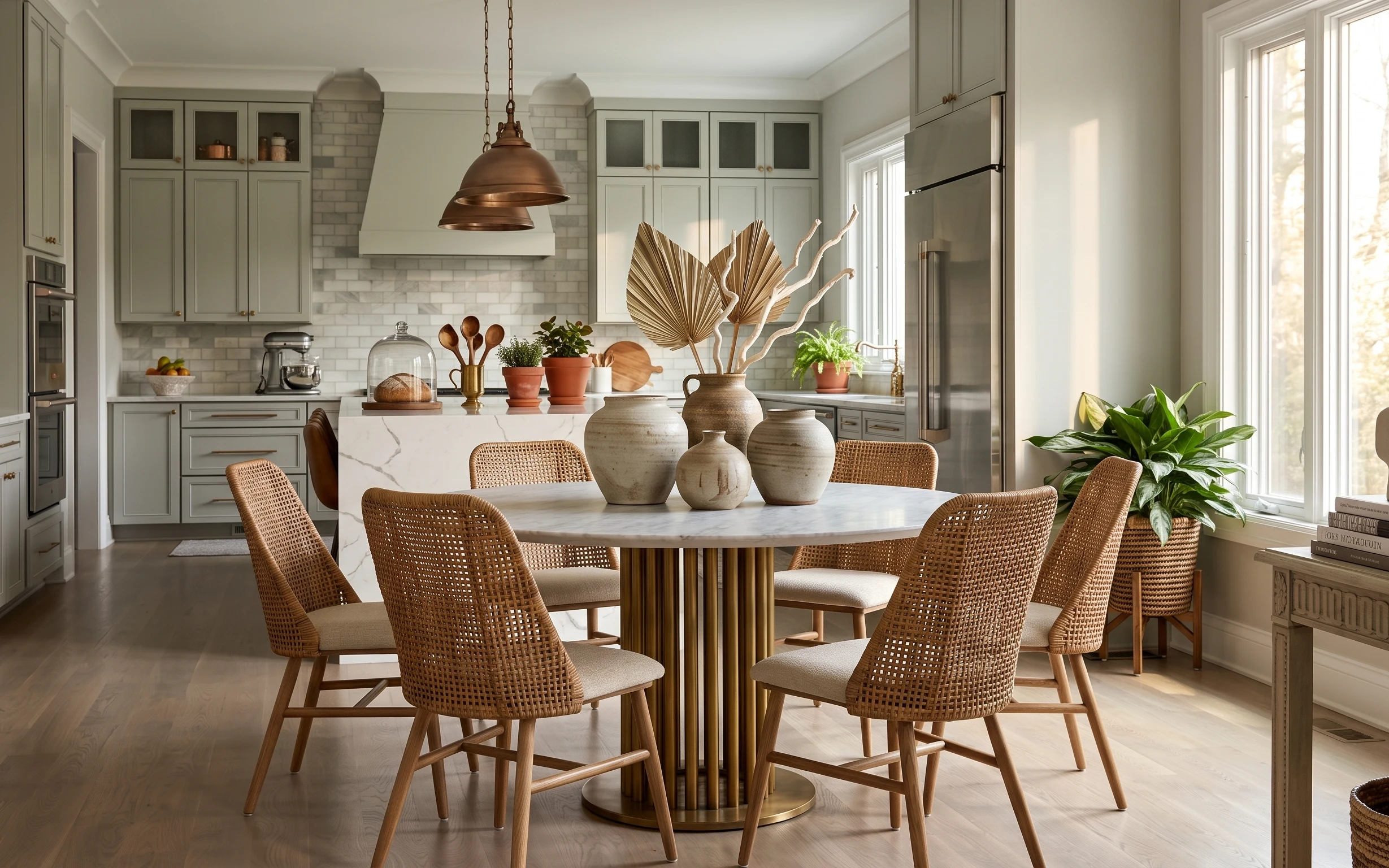
The easiest way to copy this vibe (without asking your landlord) is to focus on textures you can swap: rattan chair backs, cream seat cushions, and the matte ceramic shapes clustered on the table. In magazines like Elle Decor and Architectural Digest, you’ll see this coastal-warm mix again and again—natural fibers plus calm, light neutrals. Here, the warm brown woods and ceramics stay cohesive, while the greenery adds contrast without taking over. It’s achievable on a real budget because most of the look is just styling plus a few key pieces.
My first attempt at this kind of dining setup was too “matchy”—same color, same height, all in a neat line. The turn happened when I stopped chasing symmetry and started stacking: a larger ceramic form in front, smaller pieces around it, and a couple planters for height breaks. That’s what makes the center feel intentional instead of crowded. It also helps you keep it rental-safe: everything can pack up neatly at lease end.
Layer 1 — rectangular wood dining table ($200) grounds the whole centerpiece
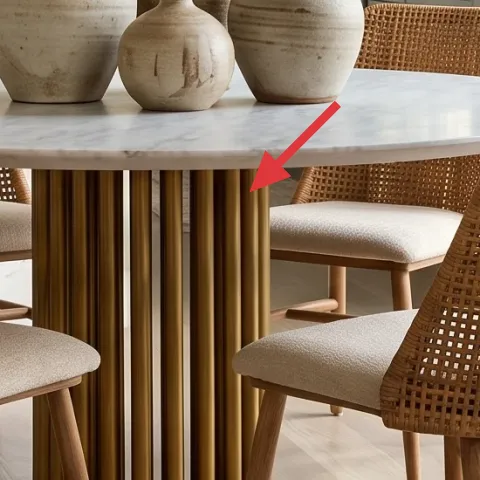
The rectangular wood dining table is the anchor here: its warm, medium tone pulls in the rattan chairs and keeps the cream styling from feeling too stark. In this photo it sits low and wide, so the centerpiece has room to breathe instead of looking cramped. A lighter “whitewashed” tabletop would make the ceramics blend together, while a darker table would fight the bright windows and feel heavier. The trade-off I like is going for clean lines and letting texture do the work—wood grain plus natural fiber.
Match undertones, not paint color
If your chairs are honey-toned, pick a table with a similar warm undertone—even if the wood shade isn’t identical.
Layer 2 — rattan dining chairs ($250) add texture without permanent changes
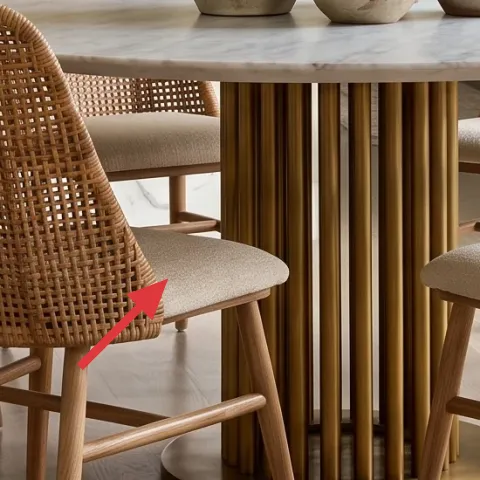
The rattan dining chairs bring that open, airy pattern that reads as coastal without going fully beachy. They’re visually light against the cream cushions and white surfaces, and the woven texture also makes the whole room feel “lived-in” instead of showroom-staged. The obvious alternative is a solid-wood or upholstered set, but those tend to look heavier in a bright kitchen-dining nook and can feel bulky near windows. This is the trade-off: rattan needs a gentle wipe, but it rewards you with a pattern that no renter-friendly rug or fabric swap can fully imitate.
Choose chairs that you can stack visually
Look for chair backs with open space so your centerpiece silhouettes still show through between them.
Layer 3 — chair seat cushions ($50) soften the woven chairs
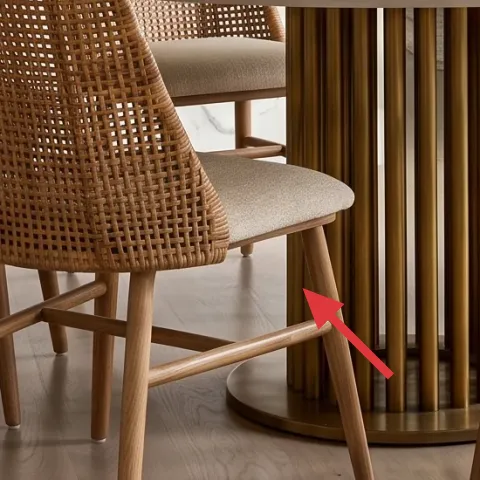
These chair seat cushions make the rattan feel comfortable and intentional—soft cream fabric against the warm brown weave. They also help the room stay cohesive because the cushions echo the light color family found across the table and surrounding surfaces. If you skip cushions and go bare, the chairs can look a little too “open,” especially under bright daylight. The trade-off is keeping cushion colors within the same family (cream, oatmeal, or light sand) so you don’t accidentally add a competing accent color.
Keep cushion color in the cream family
Even small shifts toward gray or strong white will make the woven pattern look less warm.
Layer 4 — large ceramic vase centerpiece ($85) creates height and calm
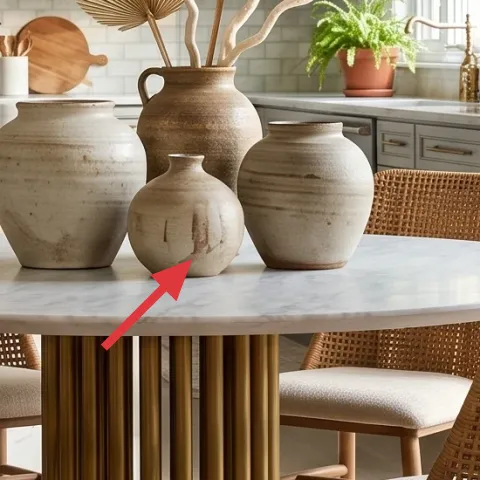
The large ceramic vase centerpiece is the vertical moment—matte, earthy, and tall enough to frame the middle of the table. Because it’s one big shape, it prevents the arrangement from turning into a scatter of small items. The soft, neutral clay tone also keeps the look from reading as overly colorful, which matters when your kitchen already has visual texture (like tile and cabinetry). Going smaller would be the obvious alternative, but then you’d need more objects to get the same impact, which often looks cluttered. This piece lets everything else act like supporting cast.
Let one piece be the “scale leader”
Pick one large ceramic form so smaller items can cluster around it without crowding.
Layer 5 — terracotta planters with greenery ($60) bring life to the center
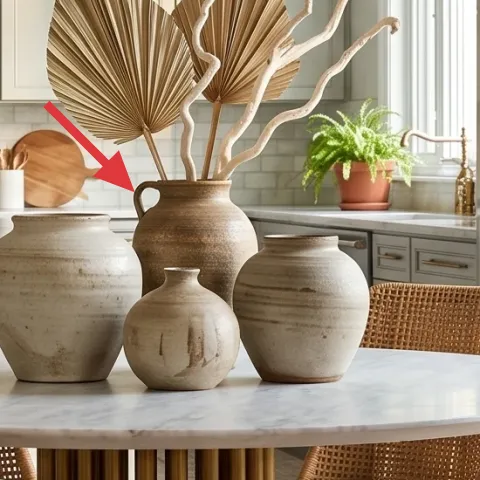
Make it instead of buying it
Paint simple terracotta pots to get the exact warm clay tone around the greenery—an easy way to match the ceramics in this rental-friendly table styling.
Materials
- Terracotta pots (4 small) — 4 — craft store/discount home goods — $24
- Acrylic paint (warm clay/terracotta shade) — 1 bottle — craft store — $18
- Painter’s tape (for clean edges) — 1 roll — hardware aisle — $8
Steps
- Clean the terracotta pots so paint sticks—wipe off dust and let them dry fully.
- Use painter’s tape to mask any areas you want left unpainted (like rims).
- Apply the first thin coat of acrylic paint, then let it dry completely.
- Add a second coat for even coverage, especially on porous spots.
- Carefully peel off the tape while the paint is dry to touch.
- Style the painted pots with greenery once everything is dry.
Total DIY cost: $50 — saves about $10 over buying.
These terracotta planters with greenery are what make the table feel “fresh,” not staged. The warm clay tone harmonizes with the ceramic centerpiece, while the green adds contrast against all the cream and white around the windows and backsplash. I like that you can change the greenery seasonally—tall stems one month, softer leafy branches the next—without buying new decor every time. The obvious alternative is adding another ceramic vase, but plants give movement and scale variation in a way plain objects can’t. Keep the pots small enough to stay clustered so they read as one vignette, not separate items.
Don’t overcrowd the table edge
Plant pots should sit inside the visual “circle” of the centerpiece—too close to chair pullout areas makes the table feel cramped.
Layer 6 — glass cloche centerpiece ($35) adds a curated, sheltered detail
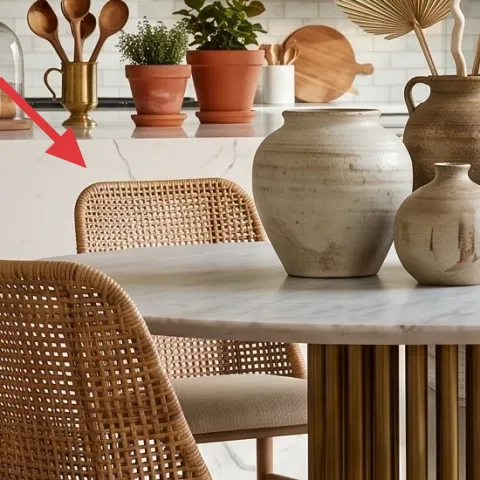
The glass cloche centerpiece adds shine and a “collected” feeling without adding color. It works here because it breaks up the matte surfaces—ceramic and terracotta—so light can catch on the glass and create a focal glint. The trade-off versus a flat tray is that a cloche takes a little more attention when styling; you want the items under it to look intentional. An easy win is to keep the contents simple and let the cloche shape do the decorating. It also stays rental-friendly: it’s light, packable, and doesn’t rely on changing any landlord fixtures.
Use height under the cloche
Even one small vertical element inside makes the cloche look styled instead of empty.
Layer 7 — book stack on sideboard ($40) gives the nook a finished edge
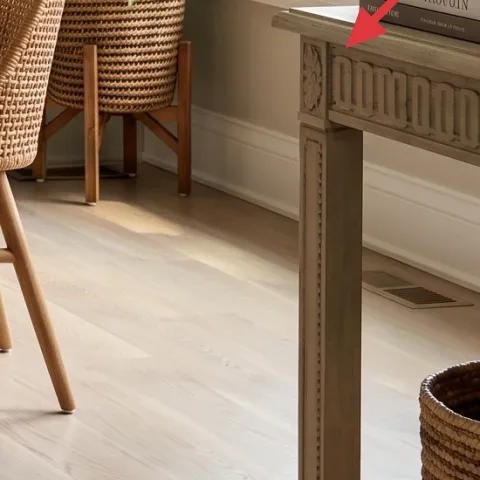
The book stack on the sideboard is the quiet finishing touch that makes the dining space feel styled all the way to the edges. Instead of stopping at the center table, it repeats the curated rhythm: sculptural object, then a layered surface (books) that gives visual structure. The obvious alternative is a single decorative vase, but that can look like “one thing placed there” rather than a vignette. Books are also a renter’s best friend because you can swap titles seasonally without changing the layout. Keep the stack tight and in a neutral cover range so it doesn’t compete with the greenery and ceramics.
Choose neutral covers when the room already has pattern
With rattan texture and greenery, neutral book spines keep the overall look calm.
The cost, layer by layer
| Layer | Item | Cost |
|---|---|---|
| 1 | rectangular wood dining table | $200 |
| 2 | rattan dining chairs | $250 |
| 3 | chair seat cushions | $50 |
| 4 | large ceramic vase centerpiece | $85 |
| 5 | terracotta planter set (DIY) | $60 |
| 6 | glass cloche centerpiece | $35 |
| 7 | book stack on sideboard | $40 |
| Total | $620 | |
If you want a cheaper version, start with thrifted chairs and a simple wood table, then spend your budget on the parts that create the “vignette” look: one large ceramic centerpiece and a matched set of painted terracotta planters.
What worked, what didn't (across the whole room)
Overall, this setup succeeds because it mixes warm natural textures (rattan and wood) with calm neutrals (cream cushions and ceramic). The greenery and cloche keep the center from feeling flat, and the sideboard styling finishes the look without extra clutter.
What worked
- The rattan chair texture adds pattern without darkening the space near bright windows.
- Cream seat cushions soften the woven chairs and keep the dining area visually cohesive.
- The large ceramic vase centerpiece provides a clear height focal point for the table vignette.
- Terracotta planters add warm contrast and make the arrangement feel fresh instead of static.
- The glass cloche centerpiece catches daylight and breaks up matte surfaces.
- The book stack on the sideboard makes the styling feel complete on the room’s edges.
What didn't
- Too many small ceramics at once makes the center read busy instead of curated.
- Plant pots placed too close to the chair pull-out area can make the table feel cramped.
- If the cushion color drifts cooler (toward gray), the whole palette stops feeling warm.
- A cloche with a visually “messy” contents arrangement looks cluttered through the glass.
What we'd skip if we did it again
Skip adding another patterned element to the centerpiece. With rattan chairs and greenery already providing texture, extra decorative patterns tend to compete and flatten the look.
Skip going monochrome with all-cream ceramics and no terracotta. The warm clay undertone is the bridge that keeps the palette from feeling too uniform next to the wood table.
Skip larger planters that spill over the table’s visual footprint. Smaller terracotta pots clustered near the ceramic centerpiece read intentional and pack up easily for move-out.
Frequently asked
How long does this kitchen-dining nook refresh take?
Plan for about one weekend. The shopping and deciding where each item goes is usually the longest part, and the actual “work” is mostly swapping decor on the table and sideboard. If you’re DIY-ing the terracotta planters, painting and letting coats dry is the main time sink. Once everything is placed, you’ll spend another 20–30 minutes tightening the arrangement so heights and spacing look balanced.
Is this renter-safe if I can’t change anything permanent?
Yes—the look relies on renter-safe, movable items: a dining table and chairs you can take with you, plus tabletop ceramics, planters, and a cloche centerpiece. There’s no requirement to drill into walls, paint, or replace any landlord fixtures. Even the DIY planter set packs up easily because it’s just paint on terracotta pots and greenery arrangement.
What if my dining nook is smaller than this one?
Use the same recipe, just scale down. Choose fewer ceramic pieces and keep the cloche vignette more compact. You can also go with two planters instead of four, placing them on opposite sides of the ceramic centerpiece so you still get visual balance. The chairs should stay consistent in size, but you can select slimmer seat cushions or slightly lower centerpiece pieces if the table feels crowded.
Where should I shop for the pieces that make the biggest difference?
For the biggest impact, shop secondhand for the chairs and table—your local marketplace often has rattan chairs and wood tables in warm tones. For the centerpiece, craft stores and home goods stores are best for ceramic shapes, glass cloches, and terracotta planters. Books and neutral cushion covers are also easy to find without overspending, especially if you mix and match across a couple stores.
What’s the biggest mistake people make with a rattan dining setup?
The biggest mistake is overcrowding the table with too many similarly sized items. Rattan brings strong texture, so you need a clear scale leader (the large ceramic centerpiece) and supporting elements that reinforce height and contrast (planters and the cloche). If everything is the same size, the centerpiece becomes visually flat and busy at the same time.
More in Kitchen & Dining
Under $700: warm rattan kitchen-dining nook refresh
A warm rattan-and-ceramic kitchen-dining nook look you can build in a rental—no painting or drilling required. This refresh uses 7 renter-s…
Under $600: 7 move-ready coffee bar corner refresh ideas
A coffee bar corner refresh for shared housing that packs into a few boxes. These 7 renter-friendly swaps use warm neutrals, copper accents…
Under $1500: kitchen island breakfast bar refresh with 7 layers
A kitchen island breakfast bar can feel brand-new with small, owned-apartment style swaps. This $1500 weekend refresh uses seven layers—rug…