- Square footage
- Small nook (about a breakfast corner)
- Cost
- Under $800 total for 7 layers
- Difficulty
- Weekend-friendly, Confident DIY
- Renter-safe
- No-drill options for art and decor where possible
Why olive-and-terracotta dinner corner is the banquette dining nook of 2026
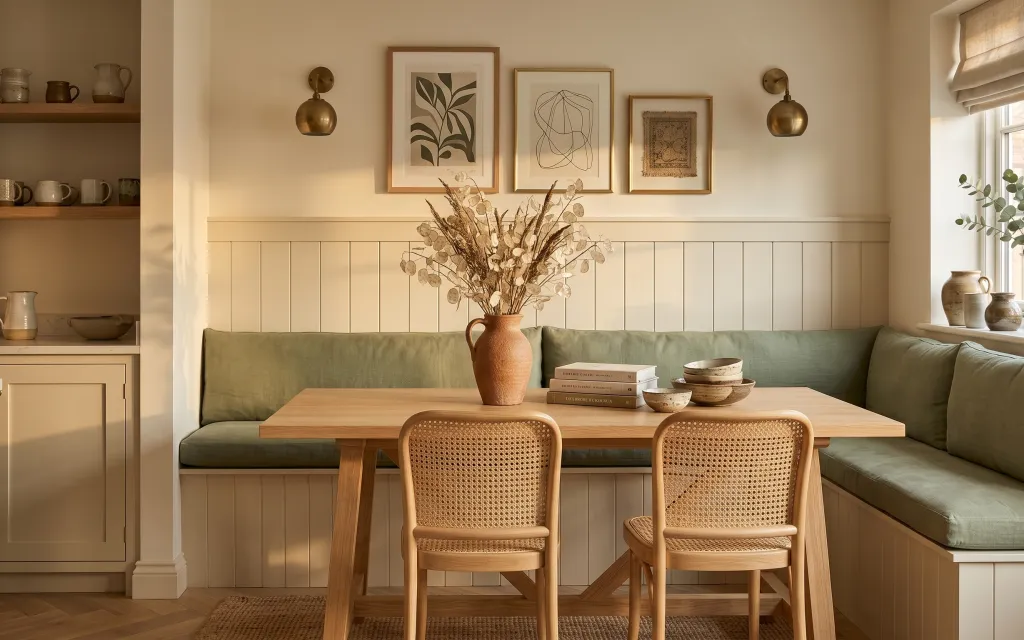
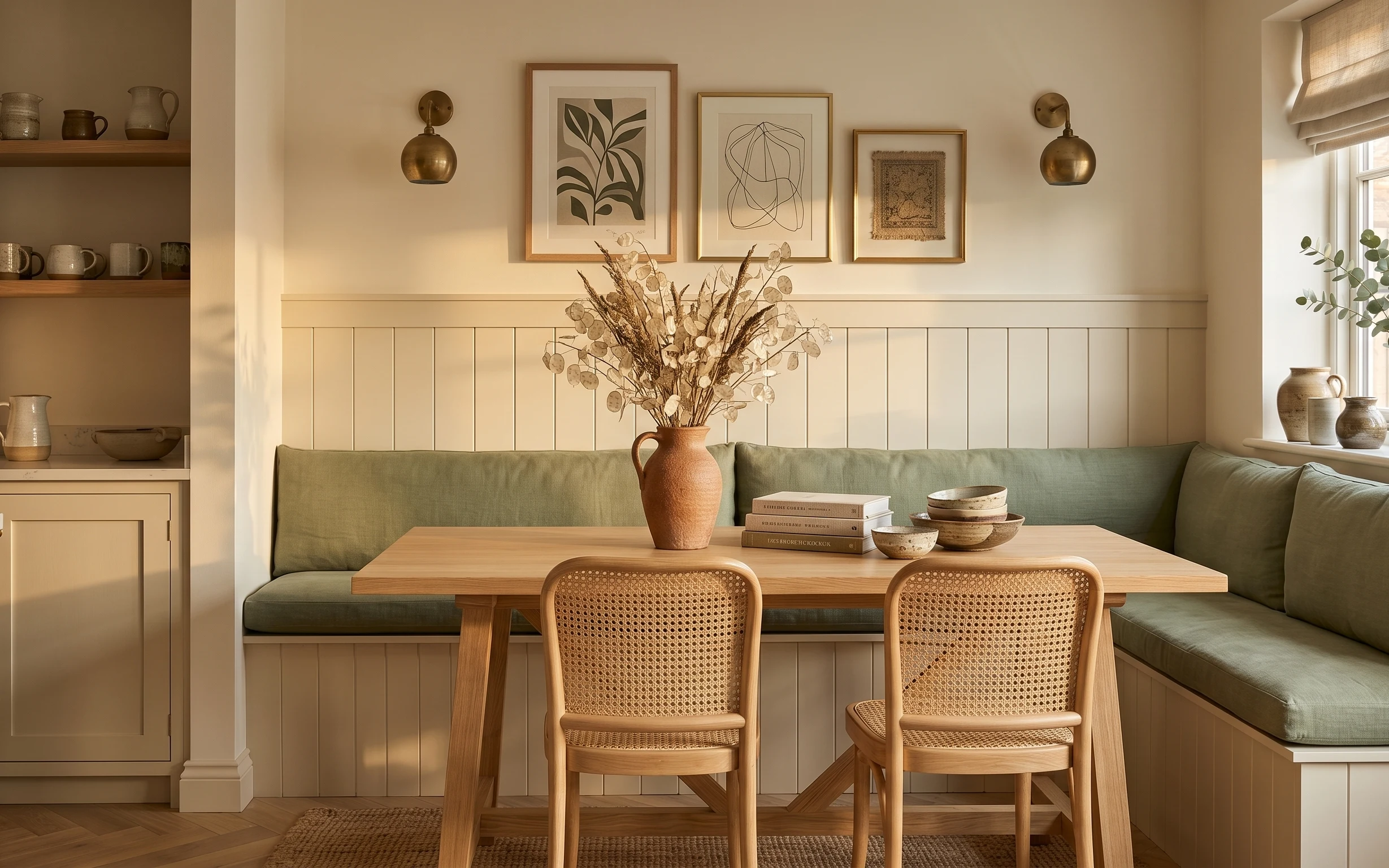
One of my favorite parts of this look is the way everything feels “collected” instead of matchy: warm cream walls with paneled molding, brass light, and a table centerpiece that’s earthy but not fussy. The olive throw pillows read soft against the smooth bench upholstery, while the jute rug adds a natural texture you can feel underfoot. Even the framed prints do double duty—vertical lines lift the eye, and the botanical shapes echo the dried stems in the vase. For homeowners working weekends, this kind of palette-based refresh is achievable without tearing anything out.
I used to think I needed a whole new dining set to get the look right, and then I noticed how this room gets its personality from details that live on top of what’s already there. The first time I tried that on my own place, I overdid the centerpiece and ended up with clutter. This time, I’m aiming for one strong focal object (the terracotta vase) plus a couple of grounded ceramics on the tabletop, so the banquette stays the “stage” instead of the background.
Layer 1 — Woven jute area rug ($80) grounds the bench-and-table rhythm
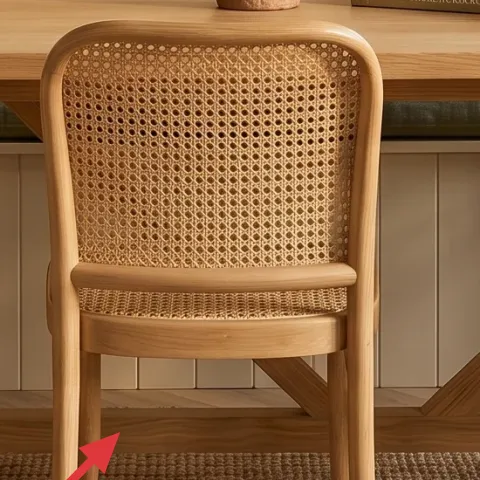
A woven jute area rug is the easiest way to make a banquette dining nook feel intentional, especially over a wood floor that shows every small footprint. In this photo, the rug sits at the entry point between the bench and the table, so it visually connects the seating and keeps the space from feeling too slick or too formal. The trade-off is that jute can be rougher under bare feet than a plush rug, but that texture is exactly what makes the earthy, coastal-japandi mix work. If you have pets or kids, plan for prompt spot cleaning and a quick vacuum pass.
Layer the rug edge under the chair footprint
Let the chair legs stay on the rug during a pull-out—so the rug looks like it was meant to be there, not added after the fact.
Layer 2 — Brass wall sconce ($80) adds warm focus without changing overhead fixtures
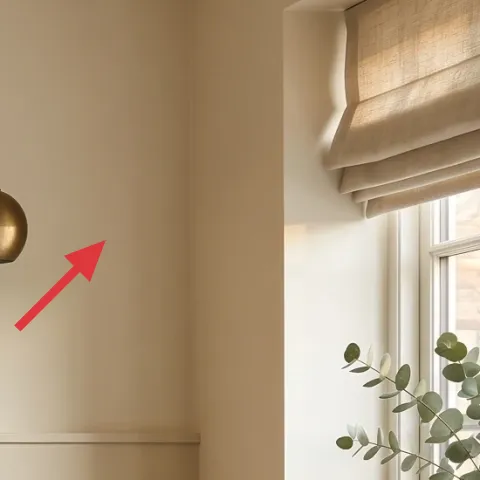
This brass wall sconce gives you that “glow from the side” effect, which matters more than people think in dining nooks. Because it’s mounted above the artwork line, it also balances the vertical wall interest and keeps the table from reading flat in the evening. I’d pick this over a third table lamp for the same reason: wall light spreads more evenly across the bench and the centerpiece. The trade-off is you’ll want to match the finish and scale to the wall molding so it doesn’t look like a random add-on.
Match the metal tone to your accents
When brass repeats in one spot, the ceramics and wood furniture look coordinated instead of accidental.
Layer 3 — 3 framed botanical and abstract prints set ($180) gives the paneled wall a focal point
Those three framed prints are the real anchor here: two clean line-style works flank a botanical-style print with organic shapes that echo the dried branches in the vase. A cluster works better than one oversized frame because it fills the tall wall area above the banquette while still feeling airy. The obvious alternative is one big piece, but that can overpower the panel molding and make the nook feel top-heavy. With this approach, you keep a steady visual rhythm—center, left, right—and let the frames’ warm wood tones tie into the dining table.
Don’t center frames too low over the bench
If the bottom edges sit near pillow height, the artwork starts to compete with the seating. Keep the cluster high enough that it “floats” above the bench back.
Layer 4 — terracotta ceramic vase centerpiece ($30) creates a single earthy focal object
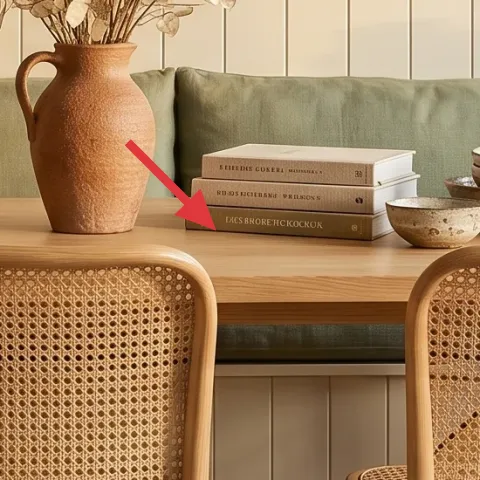
The terracotta vase with dried branch stems is doing a lot of work in a small amount of space. The rounded clay shape softens the straight lines of the paneled wall, and the warm, slightly rustic color plays nicely with the brass light and the natural rug texture. On the table, it’s also the organizing element—everything else reads as supporting cast (the small ceramic bowls) instead of random clutter. The trade-off is that dried stems can look sparse if they’re too thin or too short, so aim for stems that branch outward enough to create volume.
Keep the table styling under three “heights”
One taller object (the vase), one mid-height piece, and one low ceramic prevents the centerpiece from spreading visually.
Layer 5 — olive green throw pillow pair ($60) softens the banquette backrest
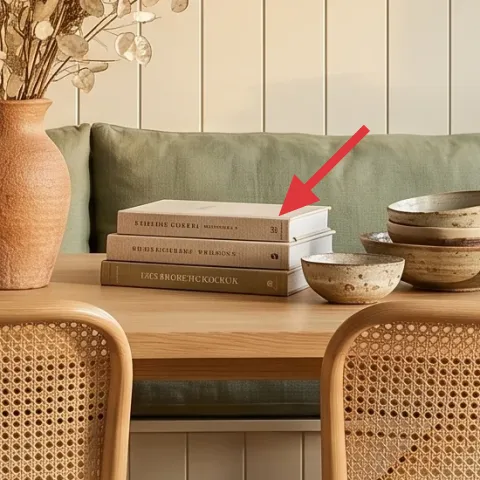
Olive throw pillows are what make the banquette feel lived-in instead of upholstered-but-still-stern. In this photo, the pillows sit centered across the bench back, so they soften the wall-to-bench transition and pull your eye toward the table. I’d choose a matching pair over one lone pillow because the symmetry balances the framed print cluster above. The trade-off is you may need a quick weekly fluffing or a repositioning after dining, since a pair is more likely to shift when people sit down.
Use pillows with a matte, linen-like surface
Matte fabric absorbs light from the brass sconce instead of creating glare on the bench.
Layer 6 — wood dining table ($120) sets the warm base for every other choice
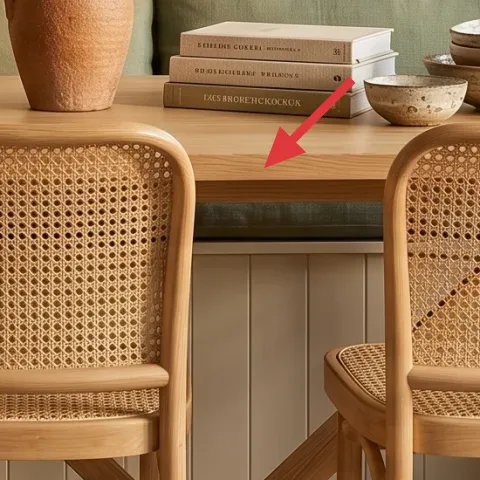
A light wood dining table is the backbone of this palette. Even if you keep the bench and wall molding as-is, the table tone makes the room feel brighter and more “natural” than painted surfaces alone. The key is choosing a table with visible grain and a warm finish, so it can echo the wood frames and keep the brass from feeling too shiny. The obvious alternative is a darker table, but it can turn the nook moody fast—especially in daylight like this. With a warm wood table, the rug, ceramics, and dried stems all read connected without extra color matching.
Pick a table size that leaves a chair-pull gap
If the chairs scrape the edge of the rug, the nook will feel tight even with good decor.
Layer 7 — rattan dining chair ($100) adds airy texture to balance the upholstery
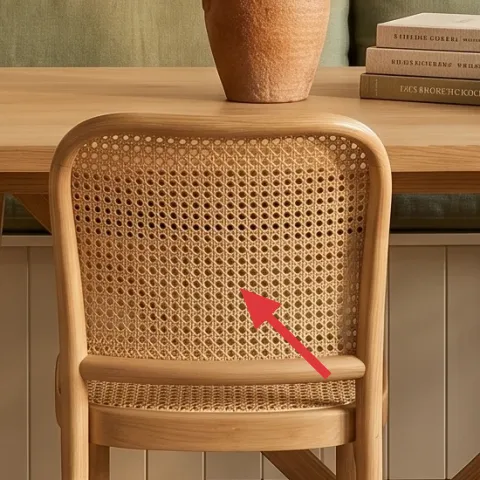
Rattan dining chairs bring in texture that upholstery can’t—so the banquette doesn’t look like one big, flat cushion. Here, the woven backs also pick up the natural fibers of the jute rug, which is why the whole scene feels cohesive. I’d choose rattan (or a woven look) over a solid wood chair when the room already has panel molding and framed prints; it prevents the wall from feeling overly “architectural.” The trade-off is rattan can look slightly uneven up close, so plan to wipe it down regularly and avoid harsh cleaners that dull the finish.
Keep the seat height comfortable for short meals
If the chairs sit too low for the table, people will slide forward and the whole setup stops feeling effortless.
The cost, layer by layer
| Layer | Item | Cost |
|---|---|---|
| 1 | Woven jute area rug 5×7 | $80 |
| 2 | Brass wall sconce | $80 |
| 3 | 3 framed botanical and abstract prints set | $180 |
| 4 | Terracotta ceramic vase centerpiece | $30 |
| 5 | Olive green throw pillow pair | $60 |
| 6 | Wood dining table | $120 |
| 7 | Rattan dining chair | $100 |
| Total | $650 | |
If you want a cheaper variant, swap the framed print set for a single framed botanical print plus one smaller matching print, and choose a thinner rug (or a budget flatweave). Keep the brass light and the olive pillow tones—those two cues do most of the work for the look.
What worked, what didn't (across the whole room)
This nook works because the palette repeats in multiple textures: brass, warm wood, olive fabric, and natural fibers. The framed print cluster and side lighting keep the space from feeling like “just a bench,” even with a small tabletop footprint.
What worked
- The jute rug reduces wood-floor contrast and makes chair movement feel smoother.
- Brass wall lighting adds warm direction across the banquette and table at night.
- The three-print cluster balances the paneled wall height without blocking the molding.
- Terracotta and dried stems introduce organic shapes that soften straight lines.
- Olive pillows make the bench feel inviting and visually “cushioned,” not flat.
- Rattan chairs add woven texture that mirrors the rug and keeps the nook airy.
What didn't
- If the centerpiece vase is too wide, it crowds the table and pulls focus from the prints.
- Using glossy fabrics for pillows can create glare under wall lighting.
- A single oversized frame can feel top-heavy against the paneled molding.
- Going too dark with the table finish makes the room look smaller and less bright.
- Skipping the rug makes the chair legs look like they’re “floating” on the floor.
What we'd skip if we did it again
Skip repainting the whole wall first. The paneled molding and warm cream base are already doing a lot, so starting with decor moves (rug, lighting, prints) usually gets a better payoff before you spend on paint and roller time.
Skip a matching set of dining chairs. A woven chair look is great here, but the moment everything matches exactly, the nook loses that collected, lived-in feel.
Skip adding more than one “tall” element. The framed prints provide vertical structure, so the centerpiece should stay tall-but-contained—otherwise the space starts to compete instead of coordinating.
Frequently asked
How long does a weekend refresh like this usually take?
Plan for 4–7 hours split over one or two days. Rug placement, pillow swaps, and table styling are quick. The most time goes to framing alignment: measuring spacing, leveling the frame cluster, and deciding the exact height over the bench. If you’re also swapping wall lighting, add time for wiring safety and testing before final positioning.
What if I rent—can I still get this look?
Yes, with swap-friendly moves. Choose peel-and-stick wallpaper only if your landlord allows it, and stick to no-drill hanging methods for the framed prints. Wall lighting can be harder in rentals; in that case, prioritize table lighting or plug-in sconces where possible, and keep the palette consistent using olive pillows and warm wood accessories.
My banquette nook is smaller—how do I scale this down?
Go smaller on the rug first (a 5×7 instead of larger), and keep the framed print cluster tighter rather than stretching it wider. Use the same terracotta centerpiece idea, but limit it to one vase and one small ceramic set so the table doesn’t feel crowded. For chairs, choose a woven back that’s visually light to preserve airflow.
If my space is bigger, what changes?
Add breathing room by going wider on the rug and increasing the frame spacing slightly so the cluster still “reads” at a distance. Consider adding a second coordinating ceramic bowl to the centerpiece so the table doesn’t look too minimal. Keep the olive pillows but consider slightly larger pillow covers for proportion.
Where should I shop if I want this earthy-coastal-japandi vibe?
Look for rug and rug pads at home-goods stores or marketplaces with lots of natural fiber options. For framed prints, choose warm wood frames in consistent sizes so your cluster looks intentional. Brass lighting is often easiest to find at lighting retailers and mid-range furniture stores; bring the palette (olive + warm cream + brass) to guide finishes.
Biggest mistake to avoid in a banquette dining nook?
Overcrowding the wall and table at the same time. The framed prints already create the vertical focal point, so the centerpiece should stay simple: one main vase and a couple of low ceramics. If everything is tall or busy, the nook feels hectic and the panel molding stops looking crisp and architectural.
More in Small Spaces
Under $800: 7 weekend upgrades for a banquette dining nook
Refresh a banquette dining nook with seven weekend-friendly upgrades—rug warmth, brass lighting, framed wall art, and earthy styling. The t…
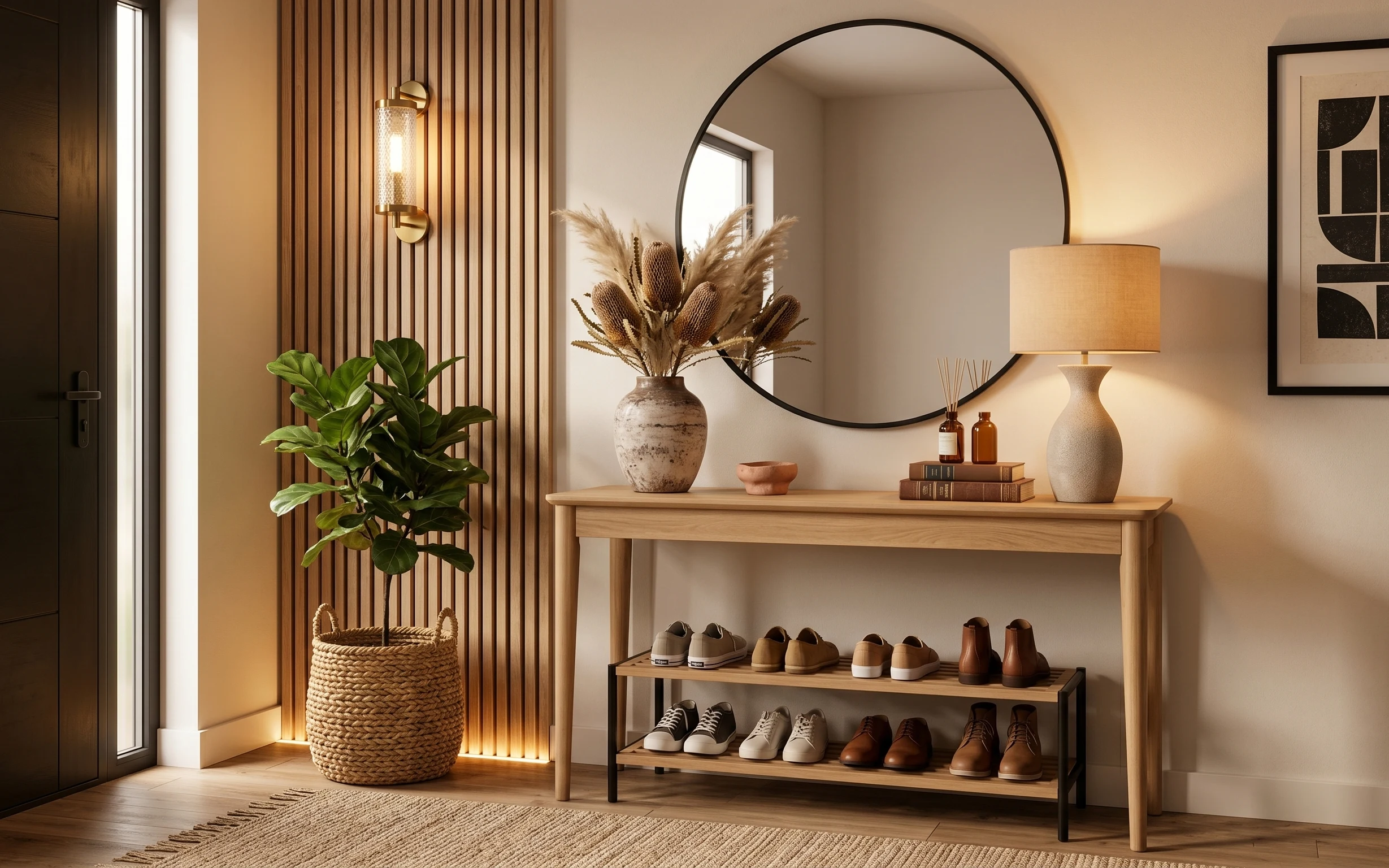
Under $500: japandi entry console nook refresh for renters
Warm wood, cream, and black accents make this entry console nook feel intentional without any wall changes. This $500 renter-friendly refre…
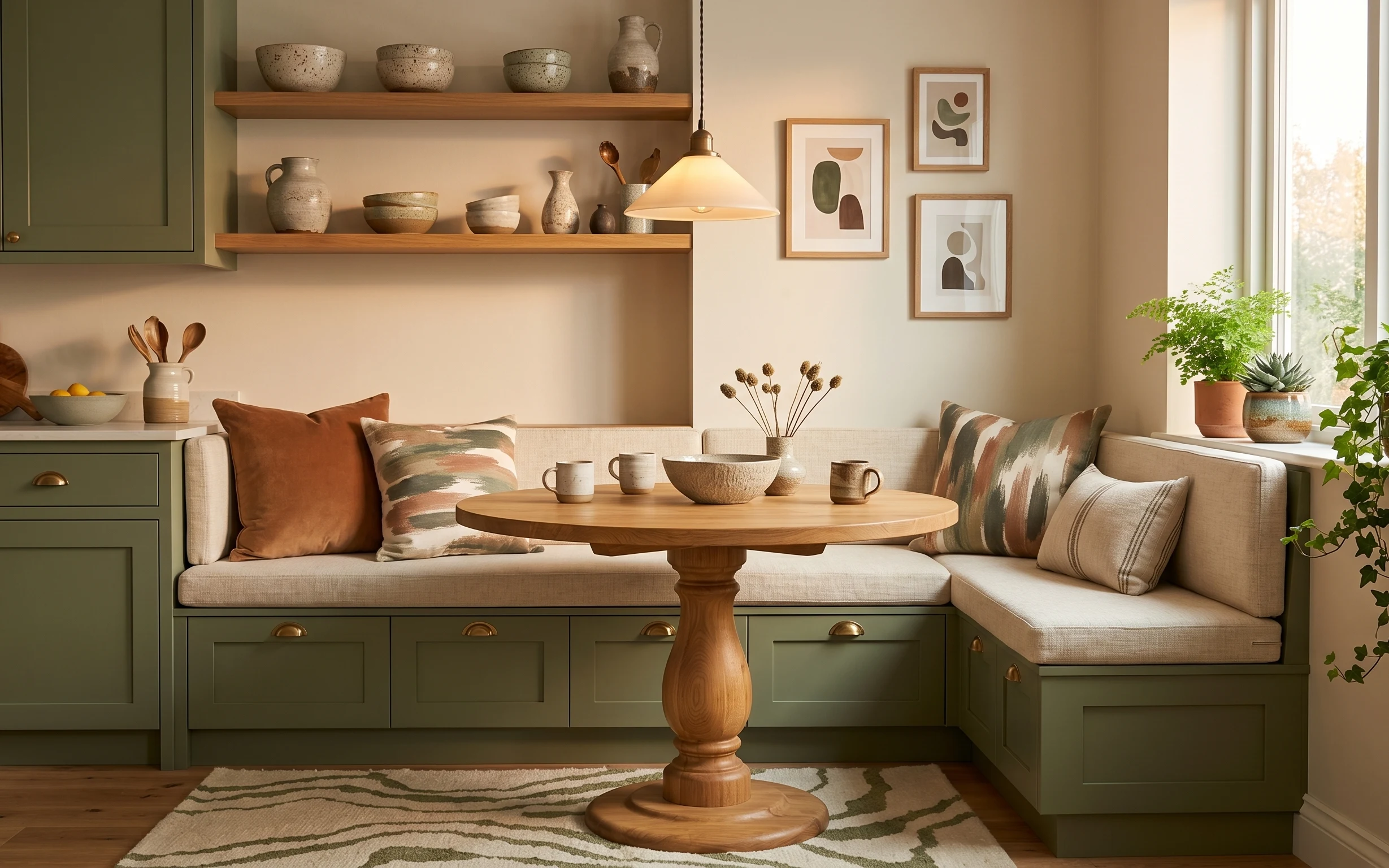
Under $400: banquette dining nook refresh with 7 renter-friendly swaps
A banquette dining nook can look styled without landlord approval. This $400 refresh uses 7 renter-safe swaps—rug, pillows, lighting, frame…